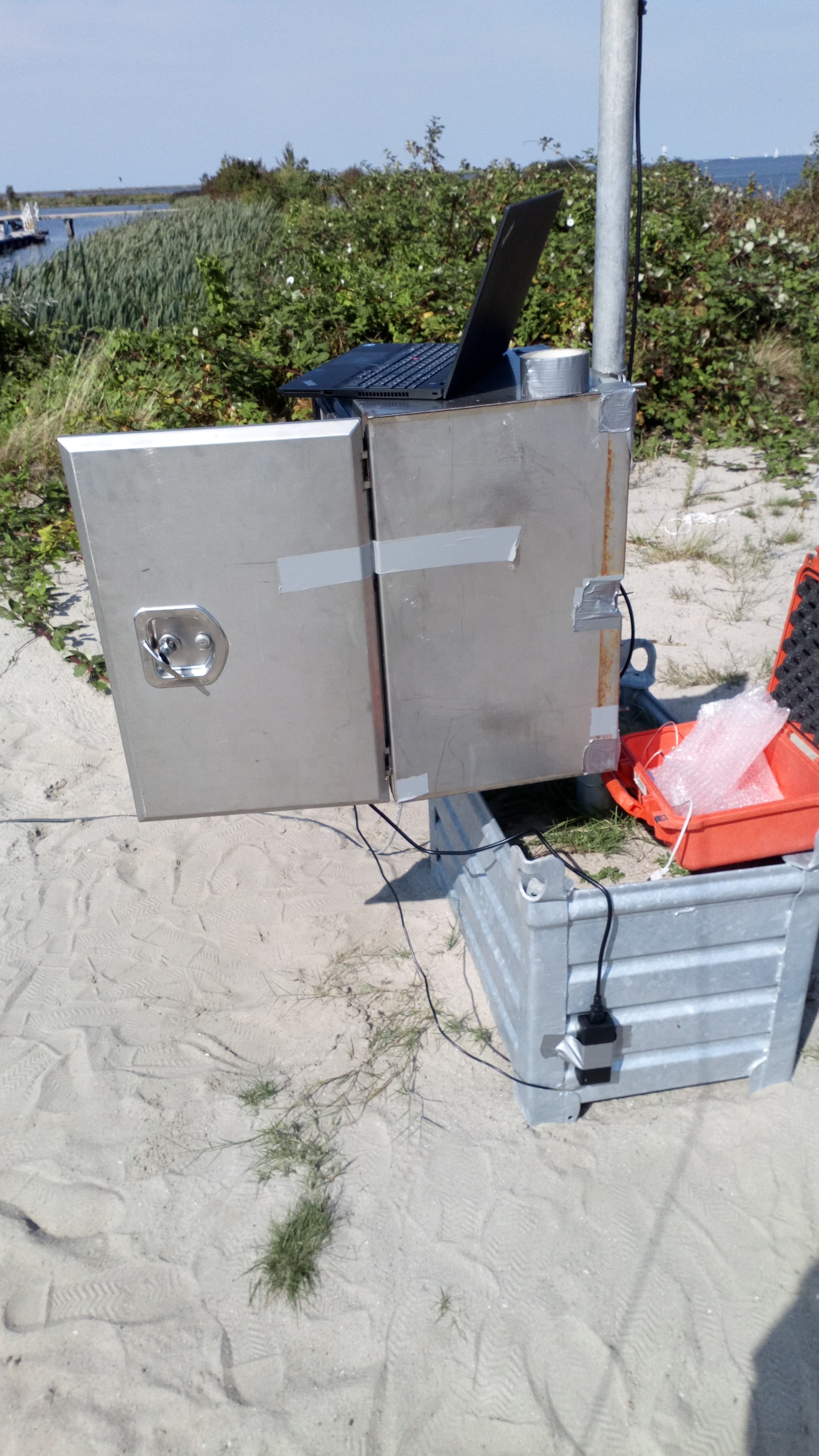
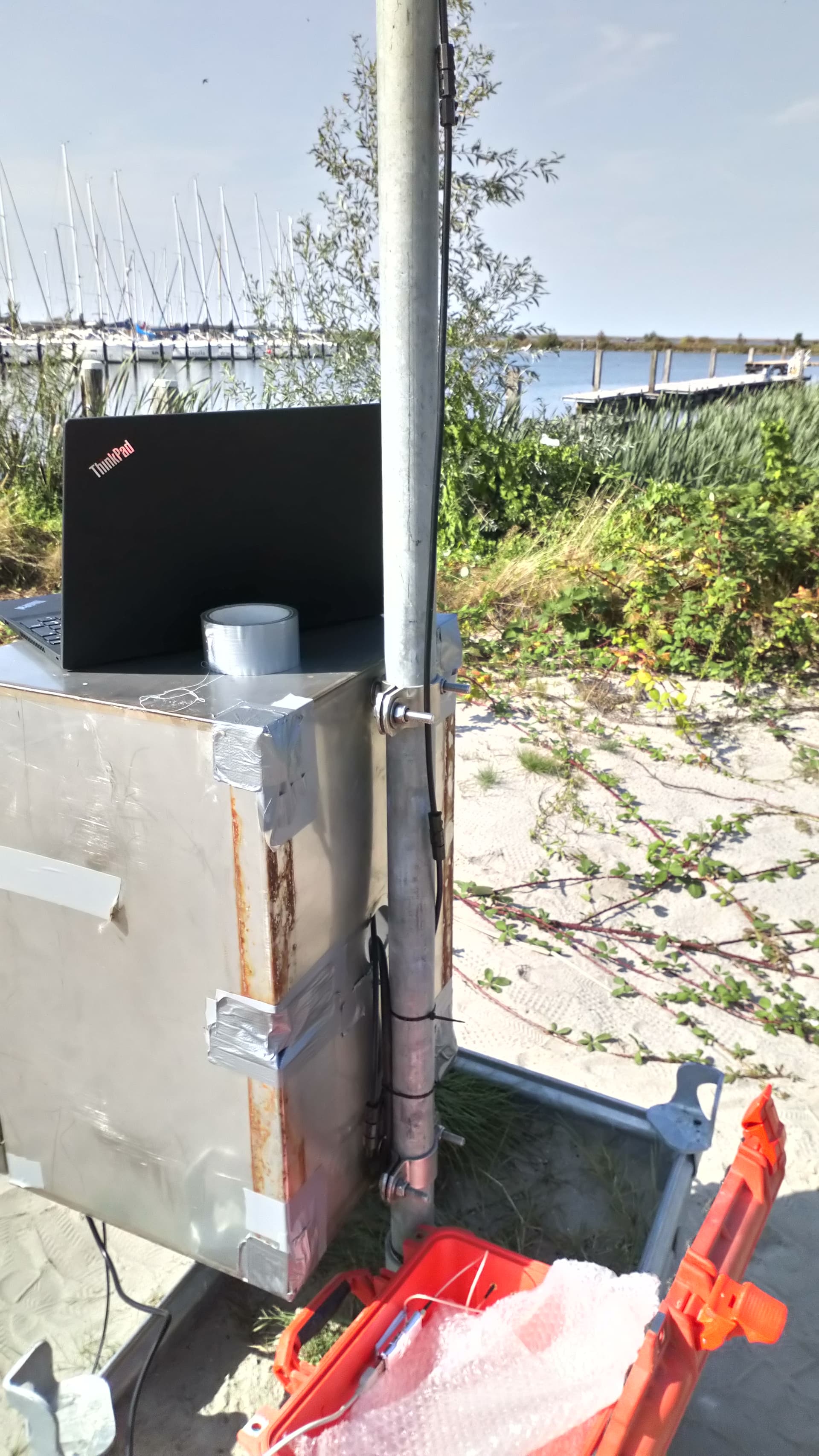
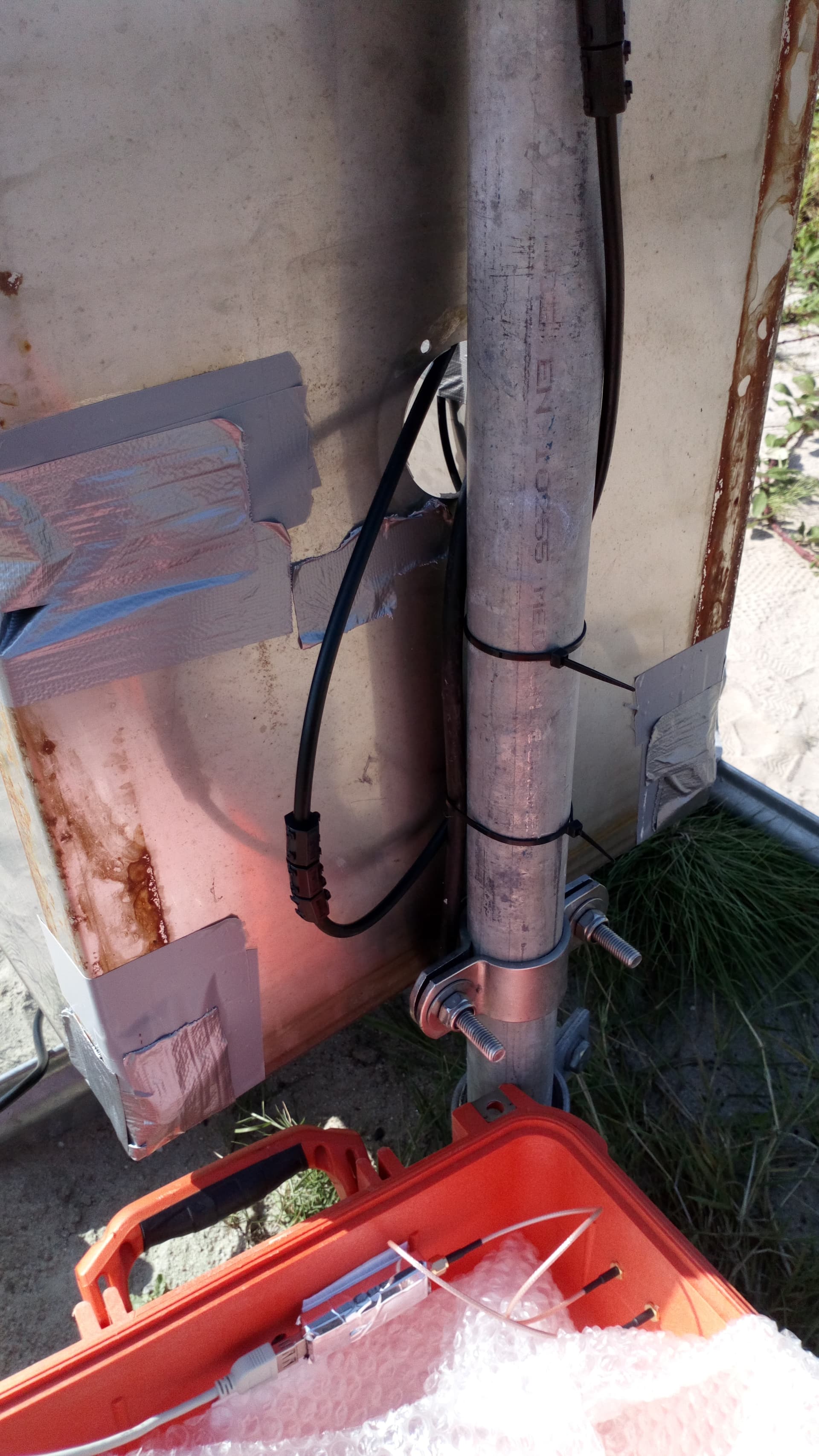
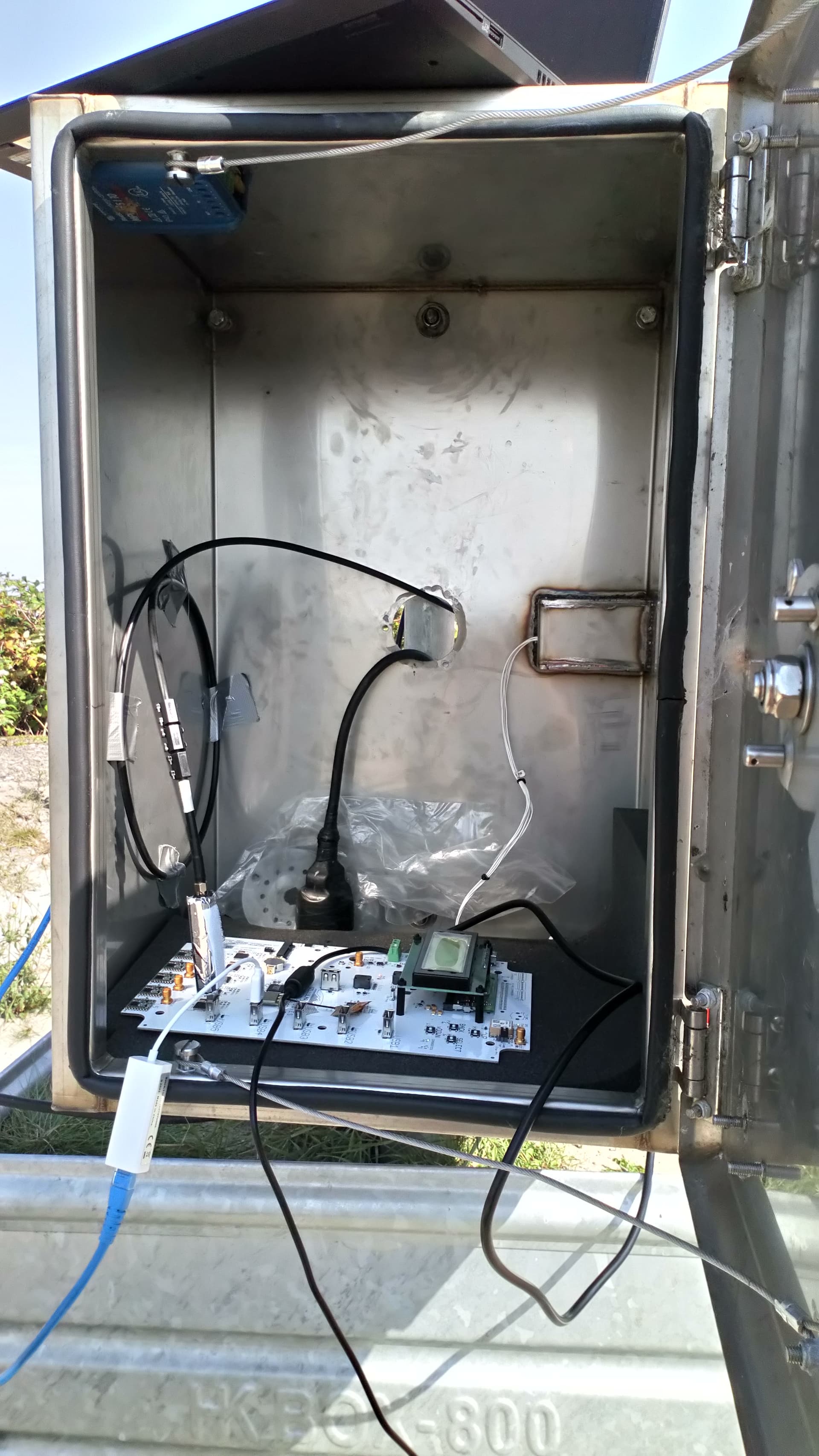
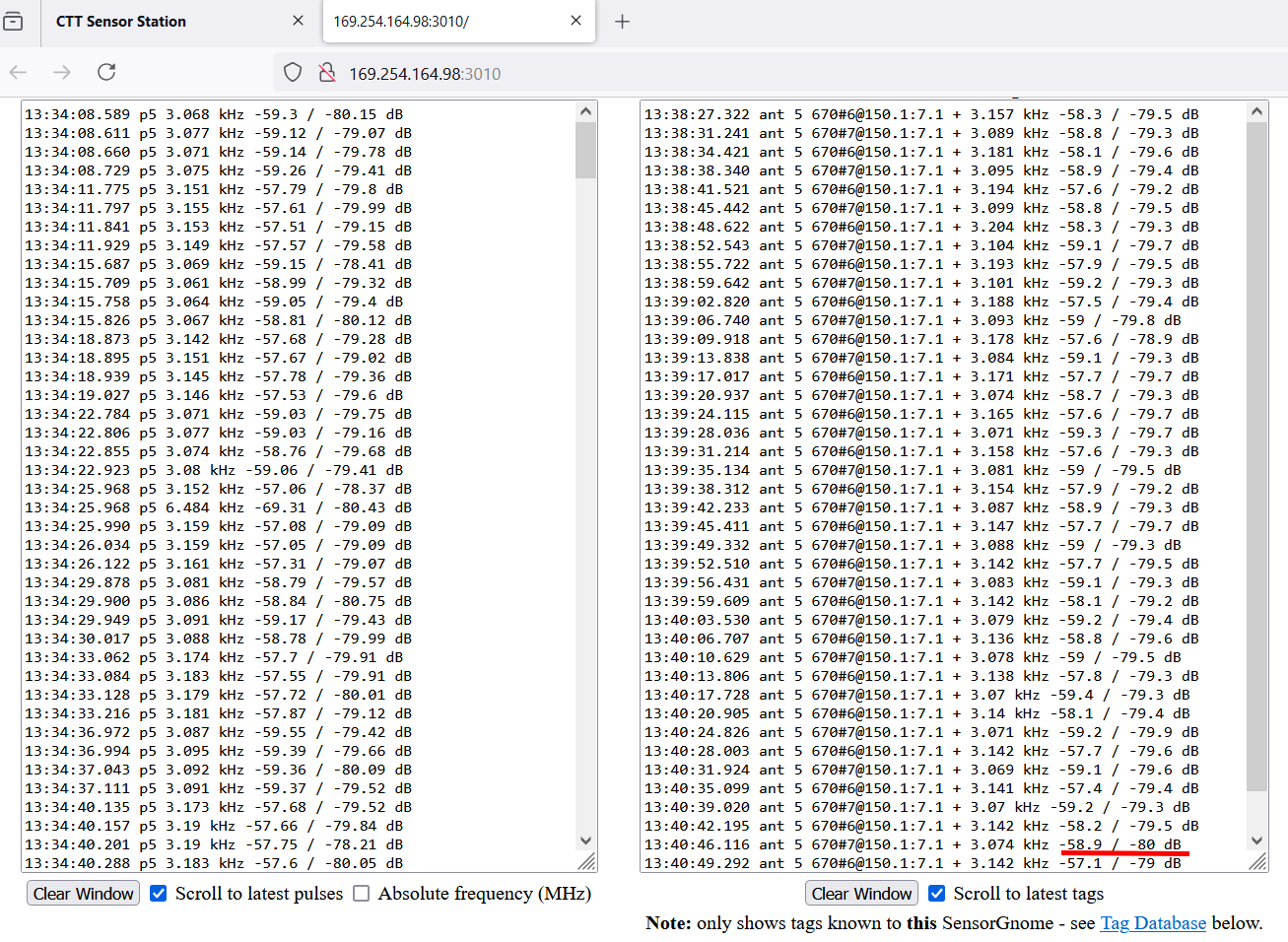
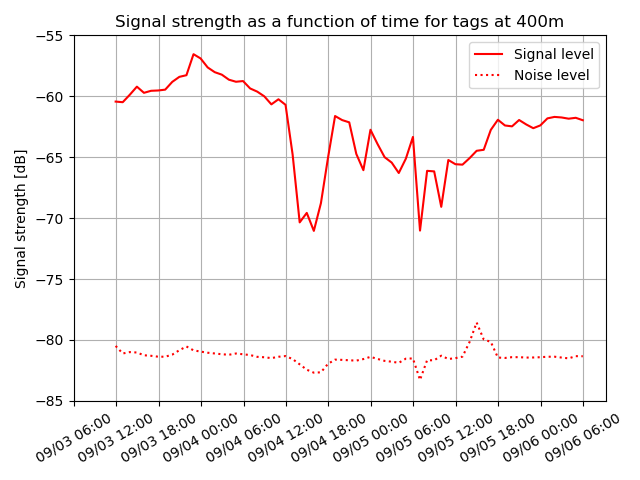
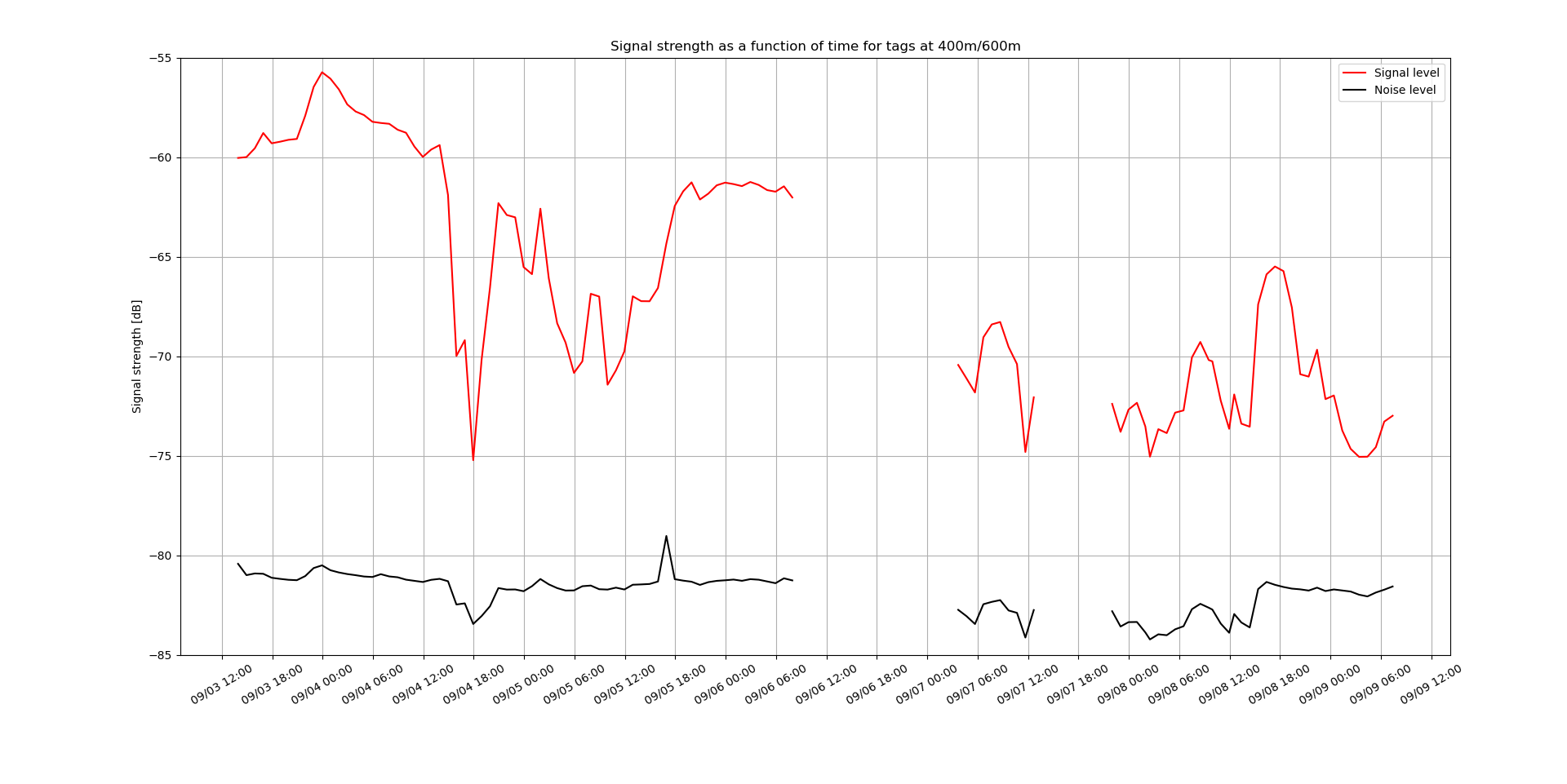
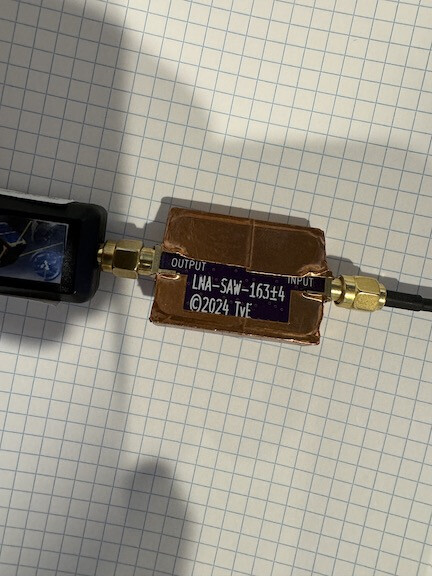
[Rich Schramm has been having issues with lots of noise pulses at 166Mhz at Ankeney Nat’l Wildlife refuge and he’s done a number of tests, incl. with the LNA+SAW filter I made over which we’ve been exchanging emails. I thought it would be nice to move our discussion to the forum so (selfishly) we might get others to chime in with ideas, and so others may glean something useful from Rich’s tests.]
From Rich Schramm [with some edits by TvE]
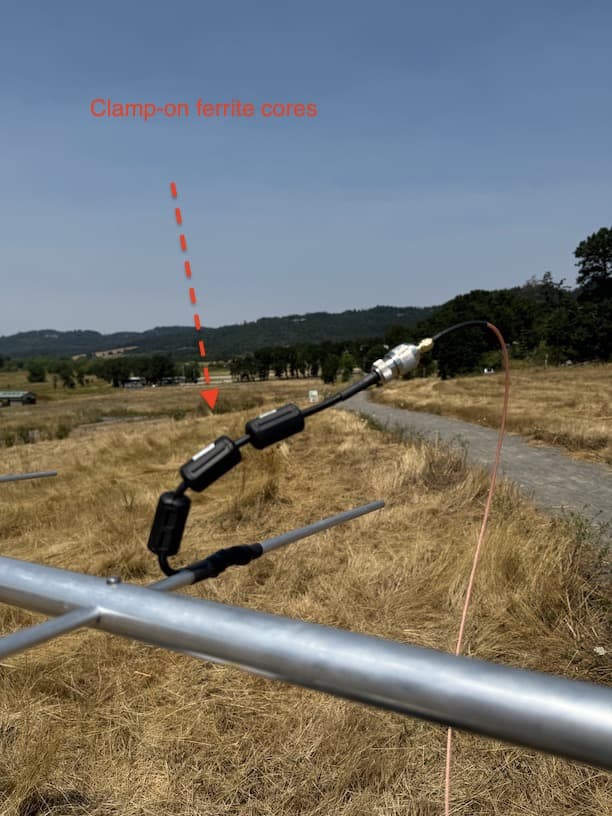
Attached are some results of my reccent 166 Mhz tag testing at Ankeny using an LNA-Filter on loan from Thorsten von Eicken and some clamp-on ferrite cores as suggested by Glenn Pollock (very active Motus tower installer and contributor with RF experience residing in Omaha NE)
I would be very happy to get your interpretations and feedback on my results as well as any suggestions on where I might go from here.
(Apologies about the length… I wanted to capture as much as I could before I forget..)
Goal:
See if we can knock down very high numbers of non-motus pulses being received and see if we can improve the detection SNR of real tag pulses.
- Testing periods were made both with and without Thorsten von Eicken’s Low Noise Amplifier+Filter
- Also tested with and without ferrite cores on coax as suggested by Glenn Pollock, using Fair-Rite Products PN:0446164281 Access to this page has been denied.
Setup:
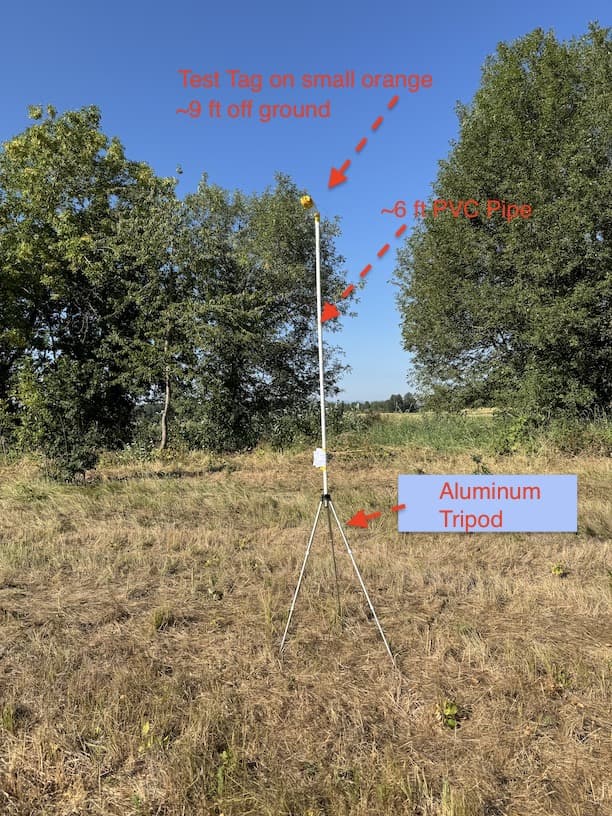
- 166Mhz test tag with burst interval of 38.2 second.
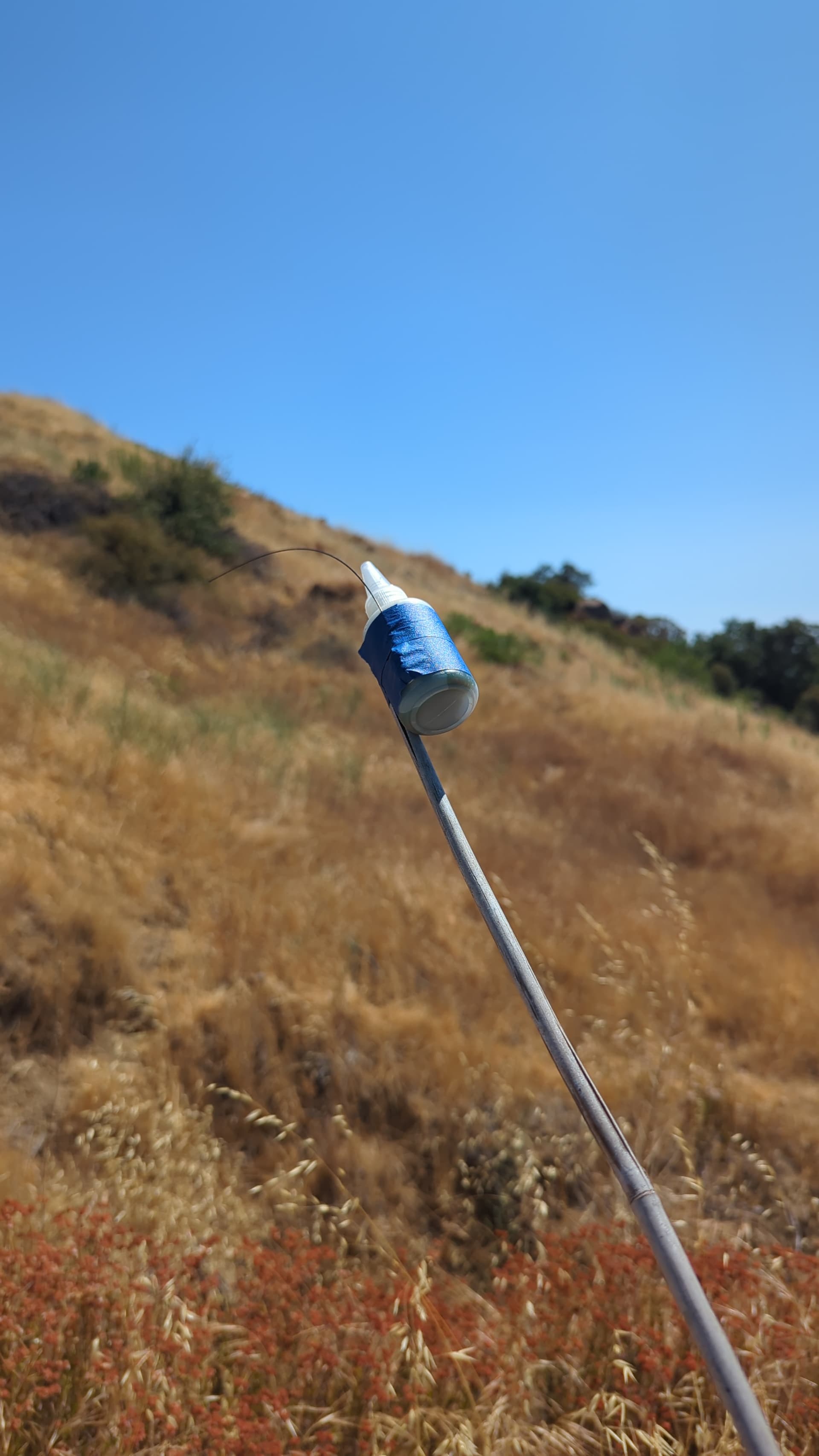
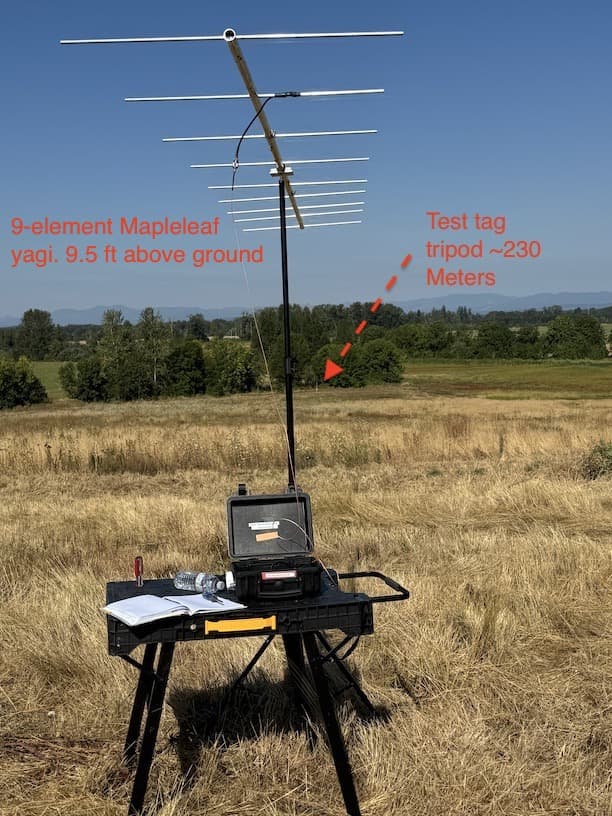
- Test tag ~230 meters away, ~3 meters off ground on plastic pole, taped to a piece of fruit (small orange).
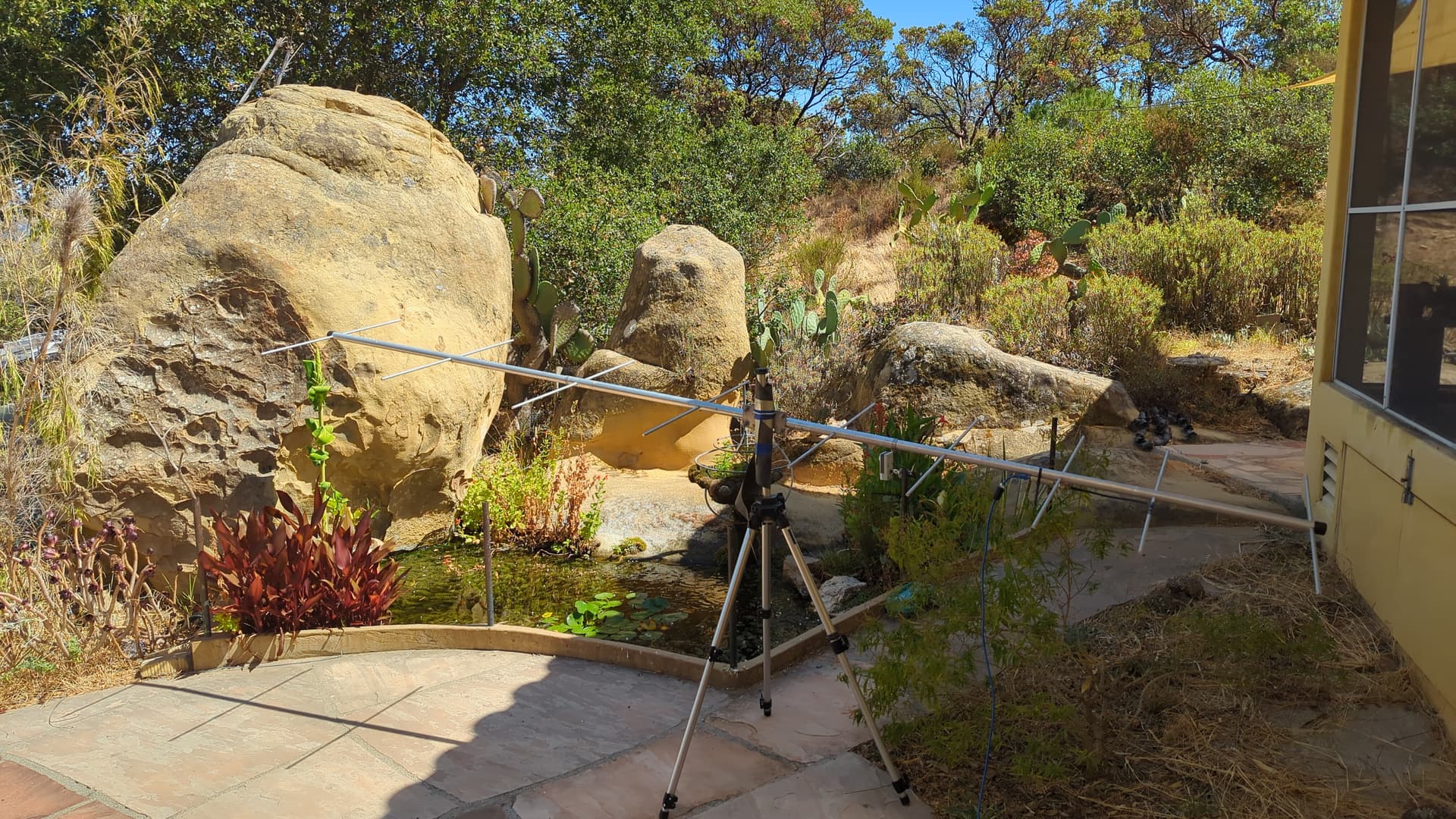
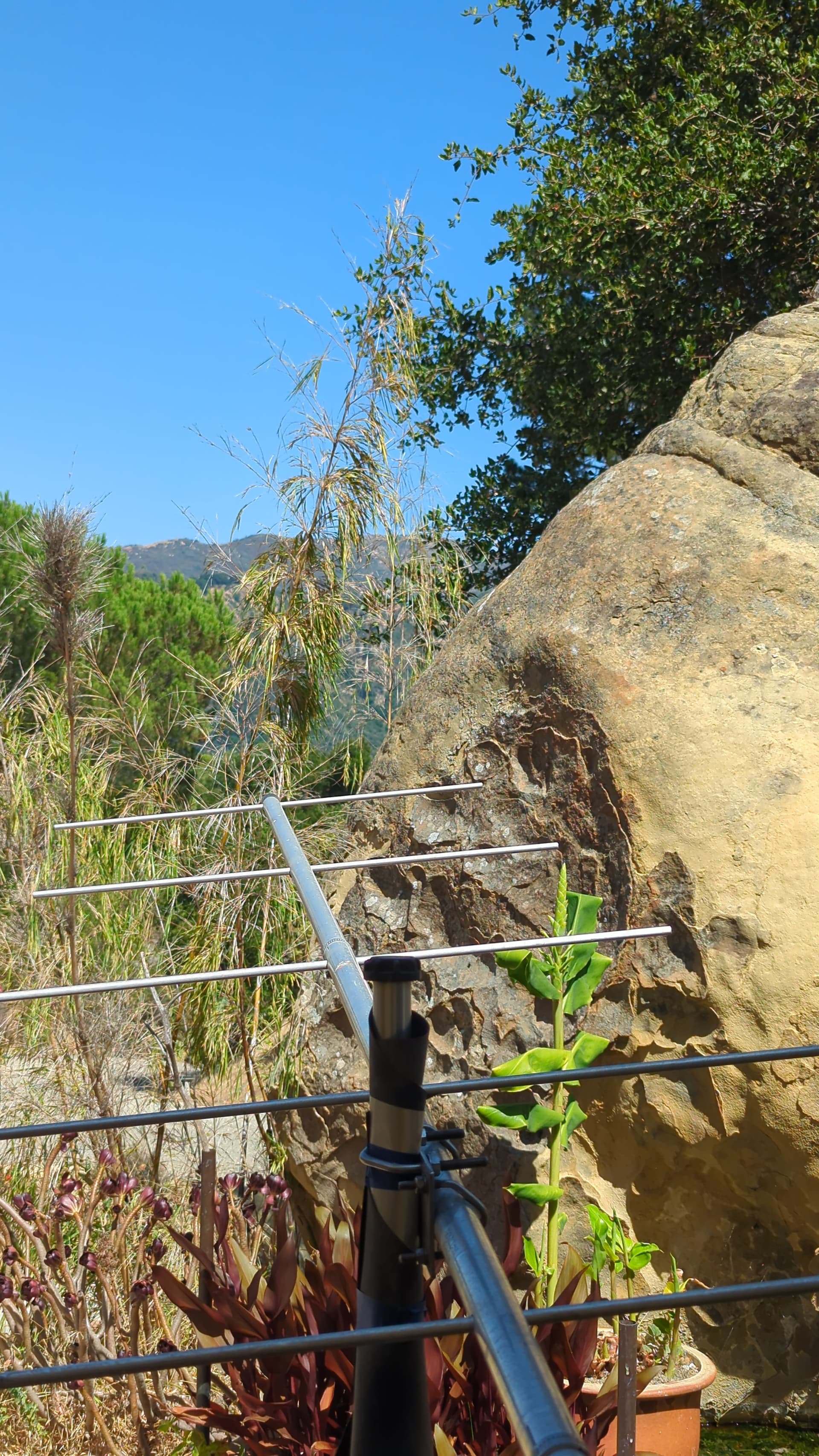
- 9-element Mapleleaf yagi, on tripod 3 meters off ground (and up-slope from tag)
- Sensorgnome (SG) V2 running SG 2024-157 release.
- Test duration of ~ 3.5 hours
- FuncubePro+ V2 with (bias-t turned enabled)
Observations:
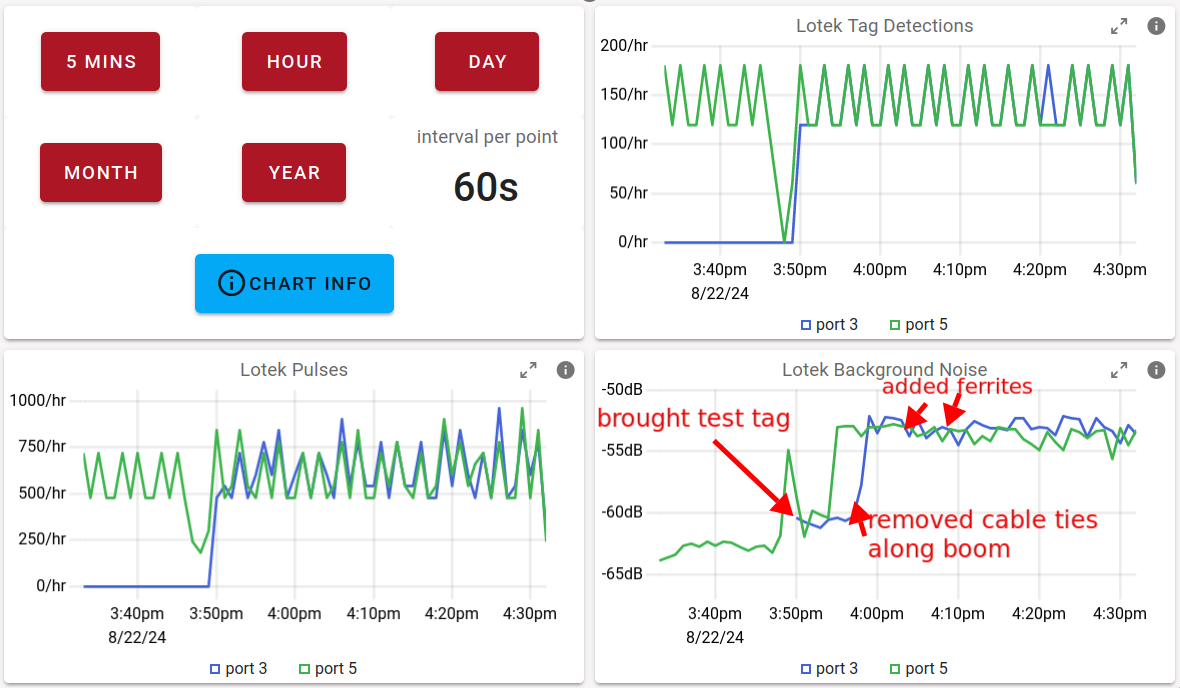
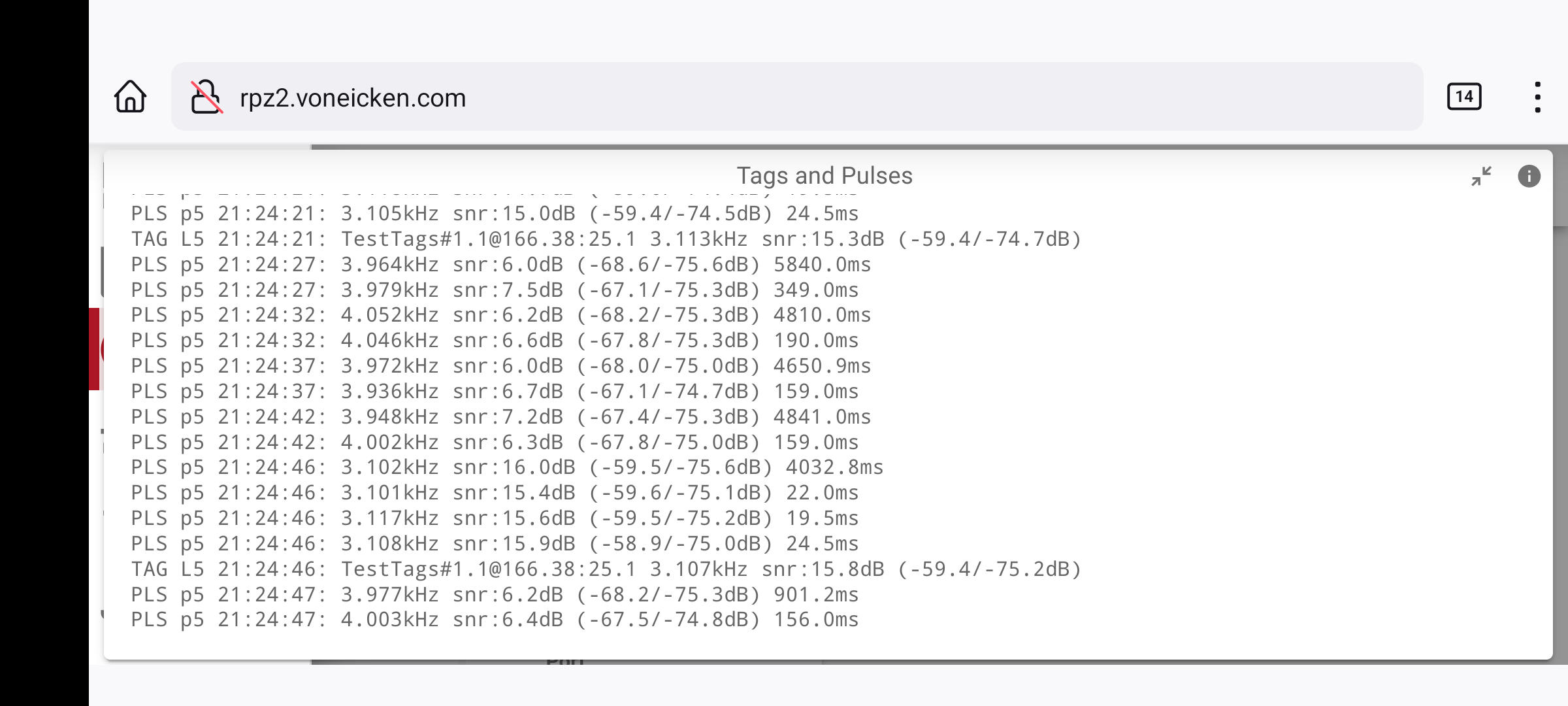
SG is still receiving a high number of false (non-motus) beeps/hits/pulses. Over the course of 4 hours the SG logged over 32000 hits. Occasionally as many as 600-700 hits were received between each 38.2 second burst.
At the bottom of the attached figure I show a roughly computed value of “Pulses Per Second” which should ideally be 0.1 but range at times from 5 to 15 per second or more.
During the day there were six major burst periods lasting around 15 minutes each, separated by relatively quiet periods of between 20 to 30 minutes (with one quiet period of 60 minutes).
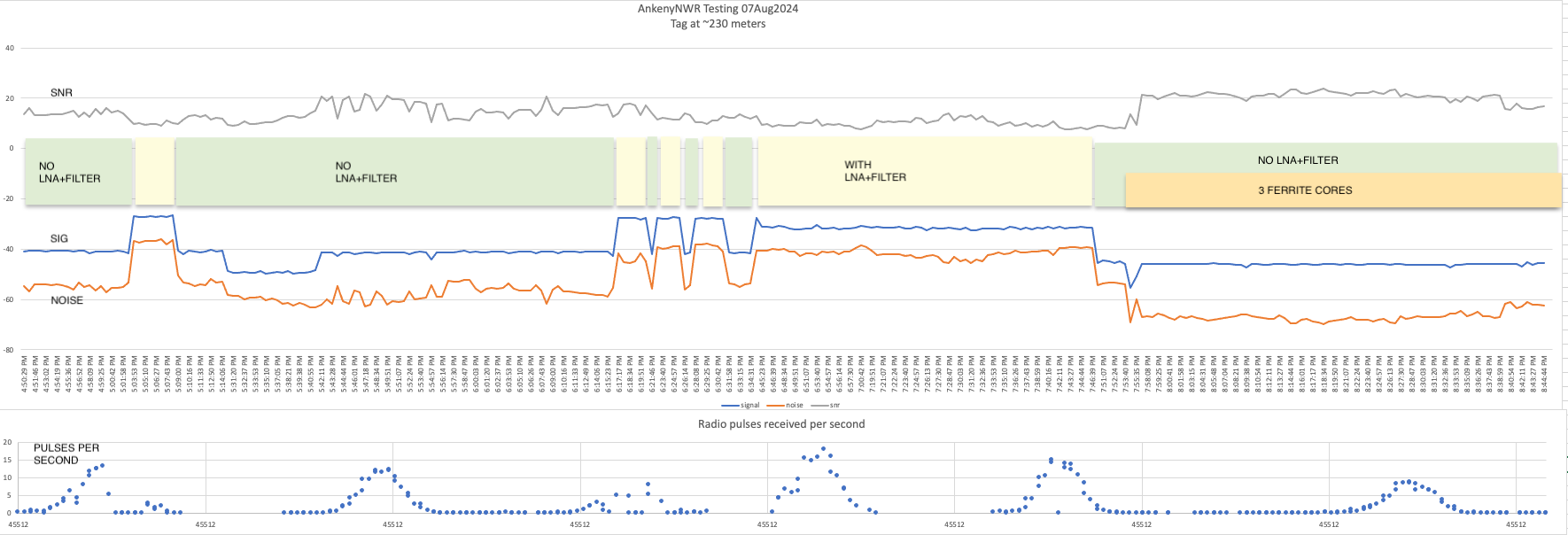
Motus.org processing detected the tag 279 times over the ~3.5 hours. There were several instances where I would expect to have missed detections (such as when the tag tripod got blown over or when I was connecting/disconnection the LNA-Filter). Overall there were only about 7 missed detections that could not be explained. Those missing detections appeared to be mostly during the periods when the highest numbers non-motus hits were being received.
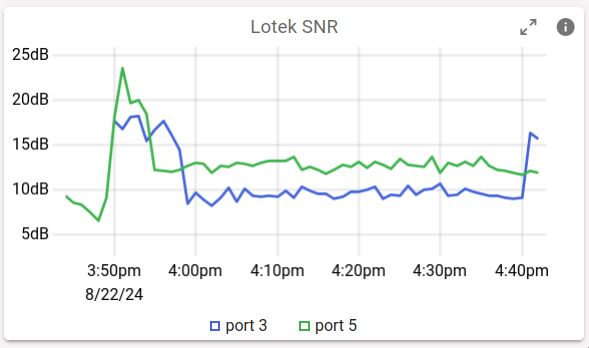
The figure also shows signal, noise and snr of all the tag detections from motus.org processing. It is annotated to show periods with and without the LNA-filter, and also with the ferrite cores recommended by Glenn Pollock.
I computed the avg signal, noise and snr for the following categories:
| TAG PULSES | SIG | NOISE | SNR |
|---|---|---|---|
| No LNA-Filter: | -42.8dB | -57.5dB | 13.6 |
| With LNA-Filter: | -32.7dB | -43.6dB | 10.4 |
| Ferrite Cores: | -46.4dB | -67.5dB | 21.1 |
(I did not have time to test with the LNA-Filter combined with ferrite cores)
I have also computed the average signal, noise and snr of only the non-Motus tag pulses in each of the three configurations:
| NON-TAG PULSES | SIG | NOISE | SNR |
|---|---|---|---|
| No LNA-Filter: | -55.1dB | -63.2dB | 7.3 |
| With LNA-Filter: | -36.0dB | -44.2dB | 7.4 |
| Ferrite Cores: | -62.7dB | -70.6dB | 7.3 |
Preliminary conclusions
-
Motus.org processing seems very good at identifying tag bursts even during periods of high non-tag pulse interference as high as 14 per second. It seemed to start to have difficulties beginning at ~15 pulses per second or higher.
-
Performing short duration tests for Motus receiver site selection or antenna orientations may give a false impression in locations such a the Ankeny Hill site due to the periodic nature of non-Motus interference.
-
Presence moderate to high non-Motus pulse rates would seem to only be a concern in cellular or satellite connected system due to cost of transmitting the extra data. (This conclusion may break down as the tag distance from the receiver is increased).
-
Im not sure how to interpret the value of the LNA-filter or the ferrite cores - partly due to the tag being only ~230 meters away. I would like to repeat testing moving the tag 500 and 1000 meters away to see what changes. Is the LNA-filter making the kind of improvement expected?
-
The ferrite cores did appear to cause a slight reduction in the non-motus pulse rate although other testing would be needed to be sure.
-
The ferrite cores made the most dramatic change in SNR but also significantly lowered both the overall received signal strength and noise measurement. Are these results surprising? Is further testing worth pursuing?
-
Next time I could also add test of combined LNA-filter and ferrite cores if that seems useful.
From Thorsten von Eicken
Hi Rich, thanks for doing the tests and the report! Here’s what I see:
-
The LNA+filter is expected to make a difference when used with RTL-SDRs because the LNA has a significantly better noise figure than the RTL-SDR input and the RTL-SDRs lack narrow filtering. I have not investigated the FCD input but expect less of an improvement on the SNR front, if any, which is kind’a what you observe.
-
The filter is about 8Mhz wide, which is rather broad WRT to the signal bandwidth (~1kHz?). It will help where “distant” signals cause issues due to intermodulation and such, a commonly quoted example is FM stations. If that’s not the problem you have, the filter will make no difference. To me it looks like your situation is in the second category. Also, the FCD has switchable input filters, they’re not 8Mhz narrow, but they do cut out FM stations, for example. The RTL-SDR doesn’t have these.
-
I don’t understand the use of ferrites on the coax, my ignorance. The specific ones you use have peak attenuation in the 100Mhz-300Mhz range which to me implies that they attenuate the signals you want to receive. The results you list show that happening. That seems counter-productive to me. What is the intent?
-
Your test shows SNRs roughly around 12dB for 230m. Given that the detection limit is at 6dB and doubling the distance reduces signal by 6dB (theory) you should barely get detections somewhere around 450-500m.
-
In my tests I have a noise figure very similar to yours (high 50’s to low 60’s using an FCD). What I observe is that if I compare FCD with RTL-SDR + LNA/SAW then the latter shows a couple dB better SNR and continues to detect the tag at distances where the FCD no longer does. That’s the main success criterion for me.
-
450m detection range, pfffft, disappointing, isn’t it? (I’m getting results very compatible with yours, to get more range you have to adandon your location and find a spot that results in less than -70dB noise…)
From Rich Schramm
Thanks for the review Thorsten.
- This URLGlenn sent about the ferrite cores What is a balun and why do I need one? - Innovantennas - Home of the Low Noise LFA Yagi - Ham Radio antennas The paragraph that may be relevant is:
Filtering stray signals picked up on the outer sleeve of the coax - Often in urban environments, many modern-day electronic devices generation noise with is picked up by the receiver. However, it is often the case that these signals are along the route of the coax form the radio to the antenna and are picked up along outer sleeve of the coax, travels up towards the antenna and enters the reciever chain this way. The ferrite core balun not only prevent common mode currents from travelling from the antenna back down the coax, it also prevents these unwanted noises picked out on the outer sleeve of the coax from entering the reciever chan which results in a lower noise floor on your receiver.
- NEW FACTS HAVE COME TO LIGHT… **** I am now completely confused ****
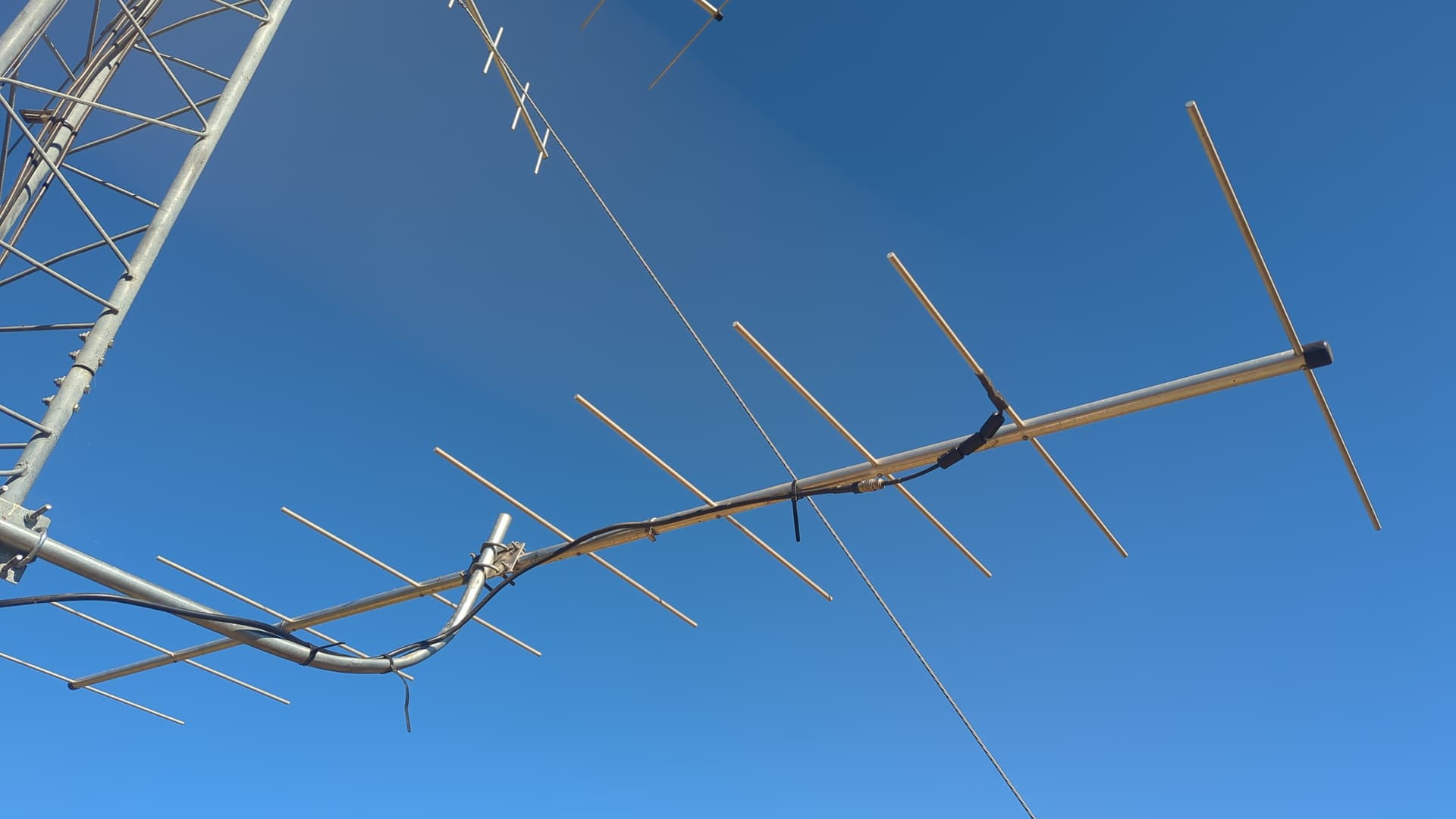
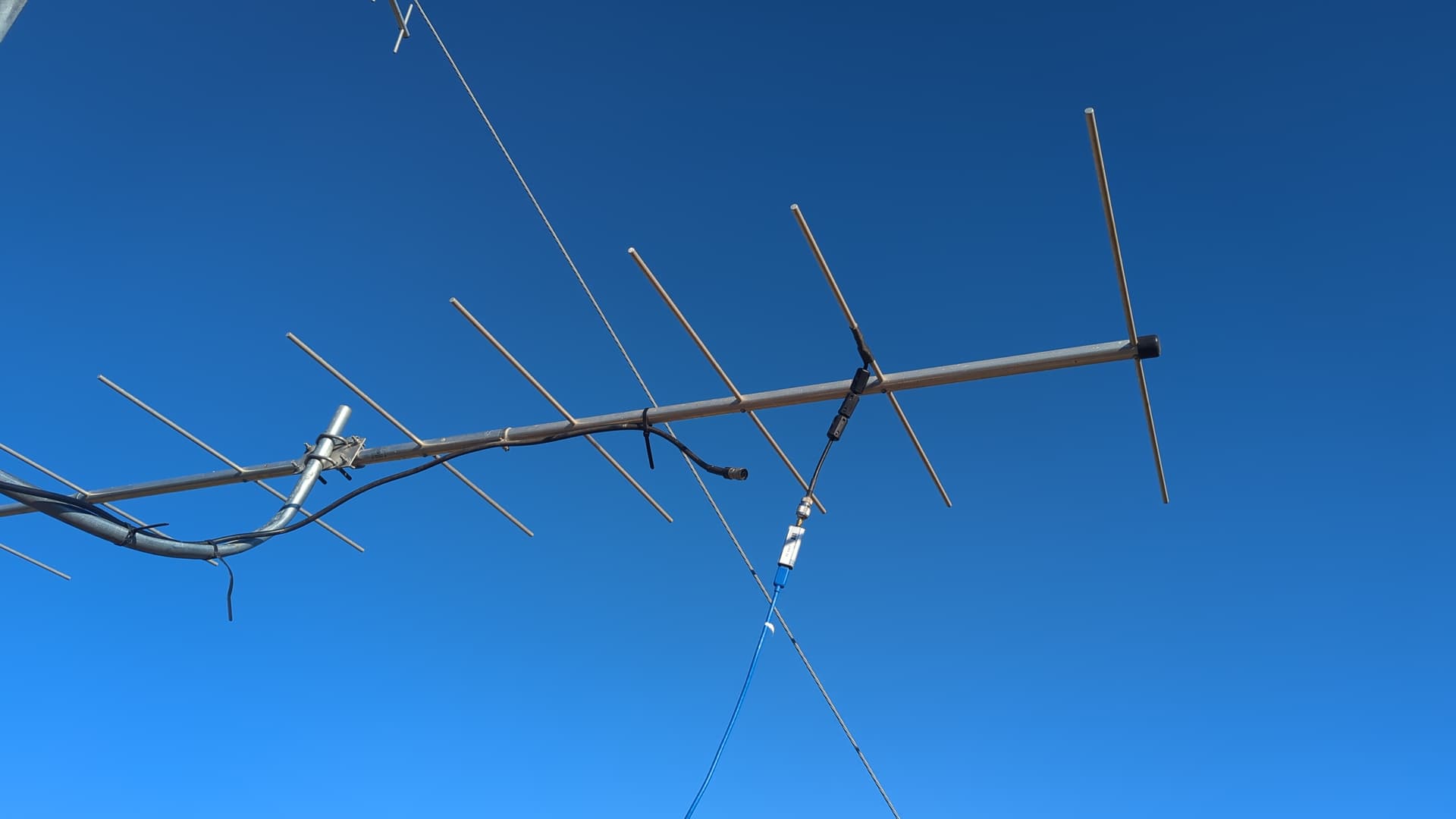
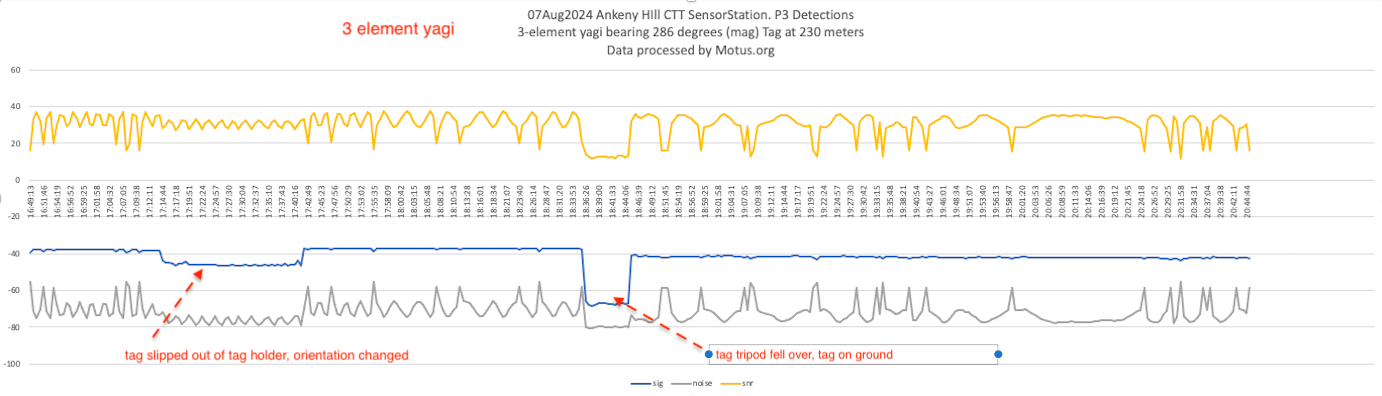
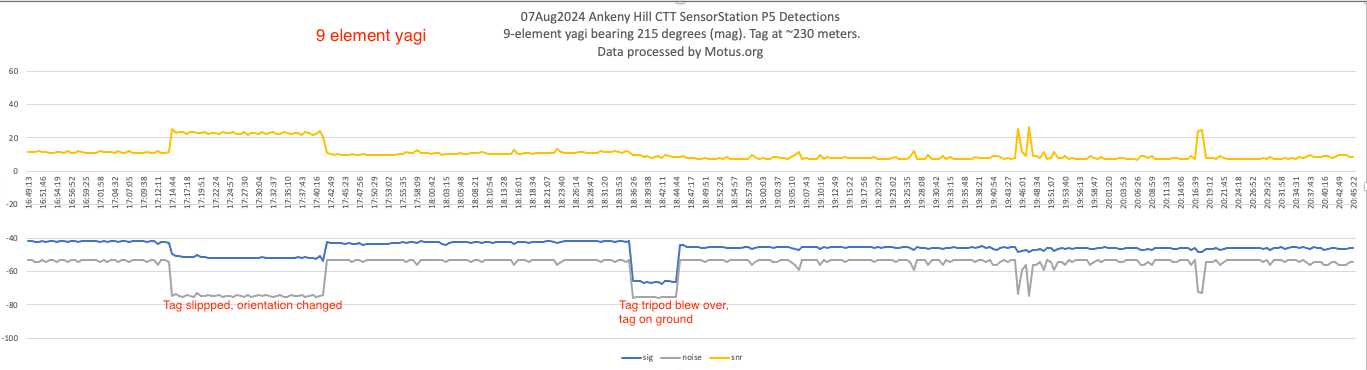
Today I went and downloaded the raw SensorGnome csv files for the adjacent AHNC motus receiver (see photo). I uncompressed the -all.csv.gz files for the overlapping test period and loaded them into excel. They DO NOT show all of the non-motus pulses that I see in the RPi sensorgnome data that I sent yesterday.. there are a very few spurious beep - but the files for the 9-element and 3-element antennas that point roughly the same direction as my test antenna - both have total of ~1500 pulses. (ideal would be ~1300) - nothing like 30000 I got on my test SG.
Attached are quick plots of the CTT station. (Remember… these are straight from the ‘production’ CTT station… no LNA-filter, or ferrites involved). Its just a different station and two different antennas listening to the same tag.
So I have absolutely no idea what is going on with my testing setup or procedures. Still a lot more to learn!
I’m about to do some traveling so my time in September to play will be limited.
As always - I appreciate all of your collective input.
From Thorsten von Eicken
Hi Rich, thanks for the updates! More thoughts:
Thanks for the link about the ferrite cores: much to learn! According to your revised numbers, the ferrites dropped the signal by ~4dB and the noise by ~10dB. The SNR went up by ~7.5dB. I have to try that here!
I wonder what happens if the SDR is directly attached to the antenna w/out extra coax. These antennas have a piece of coax already, so can’t quite eliminate that but it would certainly reduce the supposed noise pick-up by the long coax. (Yours looks very thin, btw.) I have to try that also!
I don’t know what to make of your noise-pulse-count results. If you get the high number of noise pulses regardless of where you point the antenna then I would assume that they’re not picked up by the antenna itself but rather have to do with the rest of the equipment?
Is it possible for you to set-up next to the station and swap components for a couple of minutes? Like plug the station yagi into your test receiver? You don’ tneed more than a couple of minutes to see what you see…
From Rich Schramm
Great ideas Thorsten, so if im reading you correctly, given the correction to my ferrite numbers they still warrant additional testing?
yes since I’ve moved the ankeny ctt receiver out to the tower and shortend the coaxes to from 100ft to ~35 ft, i could easily test swapping between the SG test station and the ctt sensorstation and also my test antenna to find out why i see so many hits..
I can send you a few ferrites for the 166 and the 434mhz )they are different ) if you want to play.