I’ve been building “mini motus stations” that are just a SensorGnome with one port for a monopole antenna for local detection of tags. I plan to travel internationally (Canada, Belize, Uganda) with these for targeted projects. They are physically pretty small and portable and quick to setup if you just strap the antenna to something. Power supply can go a few ways though. Sometimes I am lucky enough to just plug it into AC power (the easiest way), but I’ve built these to also have the option of 12v power. The problem is that I find they draw too much power overall for such a small device. Trying to get these into countries where lithium batteries aren’t available (or hard to get and expensive) is a challenge. I can travel with a lithium battery up to 25 aH (the compact travel versions), but that only seems to last about 12-15h without any recharge. So, I need multiple of these with solar charge…getting more complicated.
Does anyone know if there is a version of the SensorGnomes with the dongle system yet that is more power efficient on 12v?
You don’t mention which frequency you’re using. The CTT tag detection could use a lot less power, but I suspect you’re using Lotek tags. The detection pipeline includes the SDR and then processes that analyze the data. This latter part is relatively compute intensive which means it uses quite some power. There isn’t any simple way to cut that down.
The only simple lever I know of is to ensure the hot-spot is off.
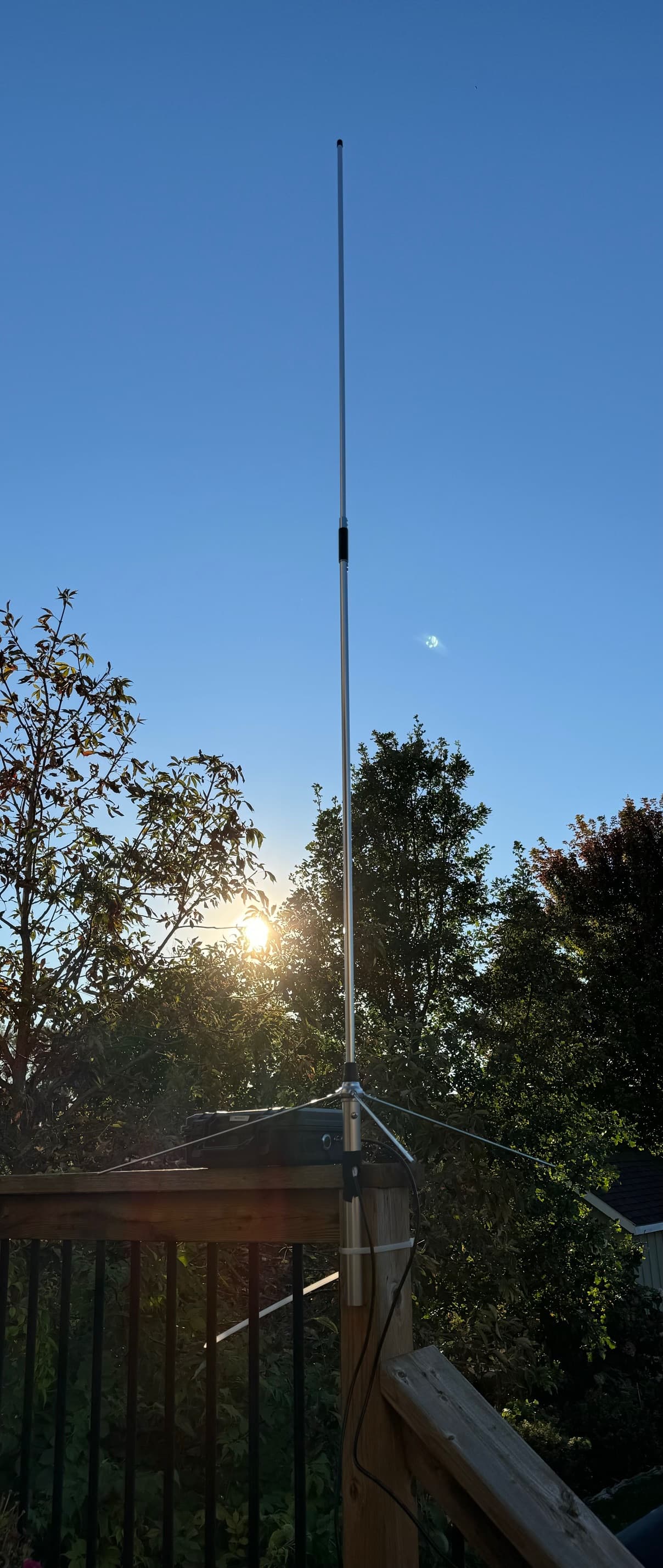
Here is a pic of the system strapped to my deck post. The tiny black box has the SG, which is on 166 for lotek tags. Just one collapsible 8’ monopole (from SigmaEight) for each station. Detection range for my small tags (NTQB201) on bats is somewhere from 150-350m. So I setup an array of these towers. I don’t use the modem or direct upload, I just let it store the data locally and then I upload to Motus.
When I can plug it into AC power - it works great! When I’m local (places I can drive to) and can connect a big lithium battery with solar - it works fine (but a bit more parts and risk of damage). Sometimes I have to carry everything in a backpack and hike. What I would really like to use for power is this:
I have one that I am testing with now, using the 12v power output. The power kit is 25aH battery, 10W solar with a charge controller and you can take it on the plane or it fits in a backpack.
I need to chain two of them together to get enough reliable power I think, but I haven’t tested that in the field yet. It would be ideal if the SG used 1/3 to 1/2 of the power it does so one of these systems could be used reliably.
Something you might also consider for the simplest 1 antenna for your bat tracking is using a Pi Zero instead of a 3B or 4 as it has lower power requirements. At least, it should work in theory!
Right. I am using Raspberry Pi 4, sixfab modem and a nooelec dongle. I haven’t built one with Pi Zero yet. How much power savings do you think that would have?
The modem uses quite some power, so if you’re not using it you should remove it or power it down. Look at ModemManager’s mmcli command to see whether it can be easily powered down.
A pi zero will most likely not work (haven’t tried). It works well with a pi zero-2W.
If using the Pi Zero (2 W), you’ll need a GPS. A USB GPS like this sort of thing should do. That’s assuming you aren’t using the SixFab modem, and since you’re aim to get use as little power as possible, that’s probably a safe assumption!
The Pi Zero 2 W only has 2 MicroUSB ports – one of which is used for the power supply – so you’d need a USB splitter to accommodate both the GPS and one dongle on the single port. Or just go with the trusty Adafruit GPS hat, which works great (though it requires some minor soldering)
I don’t know whether that GPS will work, it doesn’t really say what type it is, but most likely it will.
You can download through the hotspot just fine.
Update I think this worked!! I haven’t tried it in the field yet, just in the office tests. Using RPi Zero 2W with a USB splitter (must be high data transfer, cheap one didn’t work) the Nooelec dongle and USB GPS - but NO modem. This system is half the price of the first version and uses about half the power! It’s running at under 3W (the first was over 4W). Using the USB power from the Power Kit mentioned above, I can get 30hrs running with NO solar input. I think in a good solar exposure situation, this could run indefinitely. Obviously, I still need to test it in those field situations - solar is not always as good as we want it to be. Yes!
Nice to see you are as an active Motus community member. Would you be happy to share the list of components you used for your RPi Zero 2W (well I assume I know them all but the waterproof box perhaps) and some pictures of the box content and sides of the box with connectors? it’d be great as I am sure many Motus users have been thinking about this sort of mini receiver set-up (I know I have). Thanks and good luck with your bat projects! Dmitry Kishkinev
Agreed, this is really cool! I’d be interested in your power kit too (25aH battery, 10W panel, and charge controller), if you’re willing to share the names/links for those items. I’m looking to lower the weight of mini stations for hike-in sites. Thanks!
It’s just the “Power Kit” from Wildlife Acoustics.
One thing I’ve learned is to just use the USB power out, not the 6V, 9V or 12V, because when you step them down to the voltage for the SG, there is more power loss.
All the connectors are from Amazon too. I’ve since learned that the Nooelec dongle seems to result in much less sensitivity. So I am going back to the FunCube Pro for now and testing other antennae.
Update. These mini-Motus systems worked excellently at a study site (tracking bats) in Belize. One of them had the solar power kit and a 12v timer so it only ran at night. That stayed powered the whole time just fine. I had to modify my omni antennae to fit for travel, but I think I was getting the tags (Lotek NTQB2-1 glued) from >200m distance (probably a bunch more) through the jungle, with the antennae at eye height mostly.
Derek, sounds like your mini station set-up was a great success!
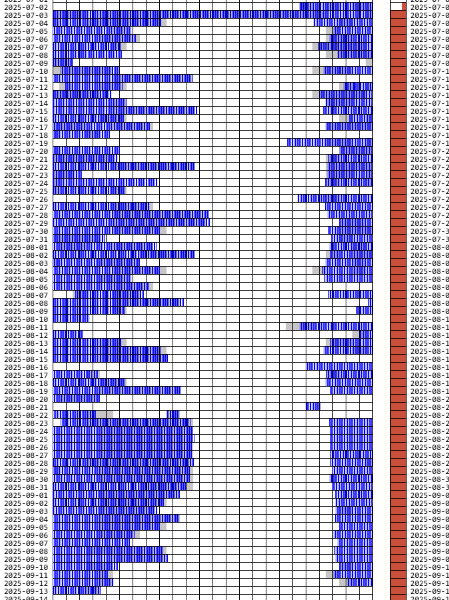
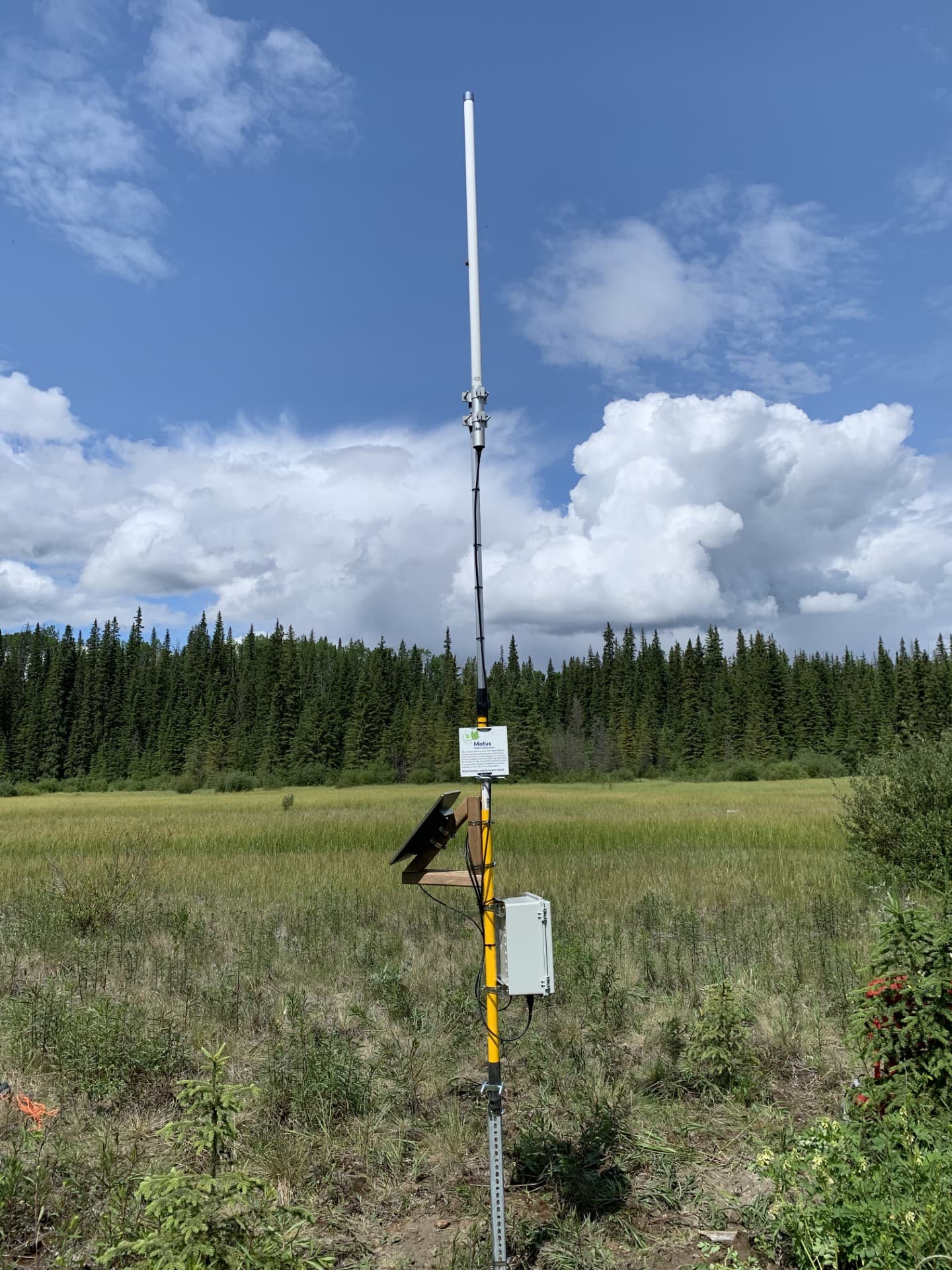
@amacdonald and I tried out the Power Kits this summer in northern British Columbia and they were a great light-weight option for some of our more remote sites that did not have vehicle access. However, we did see an issue with power consumption after our most recent data upload. Seems like the stations are turning off at night, despite being in open areas with ample sun.
We are definitely going to swap out our current RPi for an RPi Zero 2W, but we’re also wondering if anyone has further suggestions on how to reduce overall power consumption. Thanks!
Awesome! The one I set in Belize did the job very well, but I did have a 12v timer so that the SG only ran during the night. Collected data all night, every night. That certainly saved power. Here are more northern latitudes, the math is different. Might be fine in the summer with a long day and short night, but at some point that will flip and it won’t keep up.
Another option is that you could even ‘double’ these power kits. One can link to another to get a bit more juice and battery capacity. There is also a Canadian distributor of them now:
Thanks for the info Derek! The timer sounds like it worked well to save power. We’re using these mini stations to track summer movements of birds and bats, so too bad we can’t do the same.
Doubling up sounds like a viable option for us though. Thanks for providing those power kit options too. We’ll have to do some testing next spring when the days get longer over here in BC.
Please don’t blindly assume that this will reduce power consumption. You will most likely need an external hub also.
Please remember that Li-Ion batteries must not be charged below 0C and should not be discharged either much below zero (I believe the threshold varies a bit by battery). LFE or LiFePO4 work better in cold temperatures (check the cut-off). Using good ‘ol AGM is not unreasonable. Another option is good insulation around the battery and a heater (which of course uses power). There have been numerous posts about all this on the forum…
Hi Derek, thanks for providing all this information on your mini stations! It’s super useful. Would you mind sharing the 12v timer that you used? I was looking into this a little and found the Witty Pi 4 mini, but I’m not very proficient with raspberry pis, so I’m not sure if I’m on the right track. Thanks so much!