Hi Bekah,
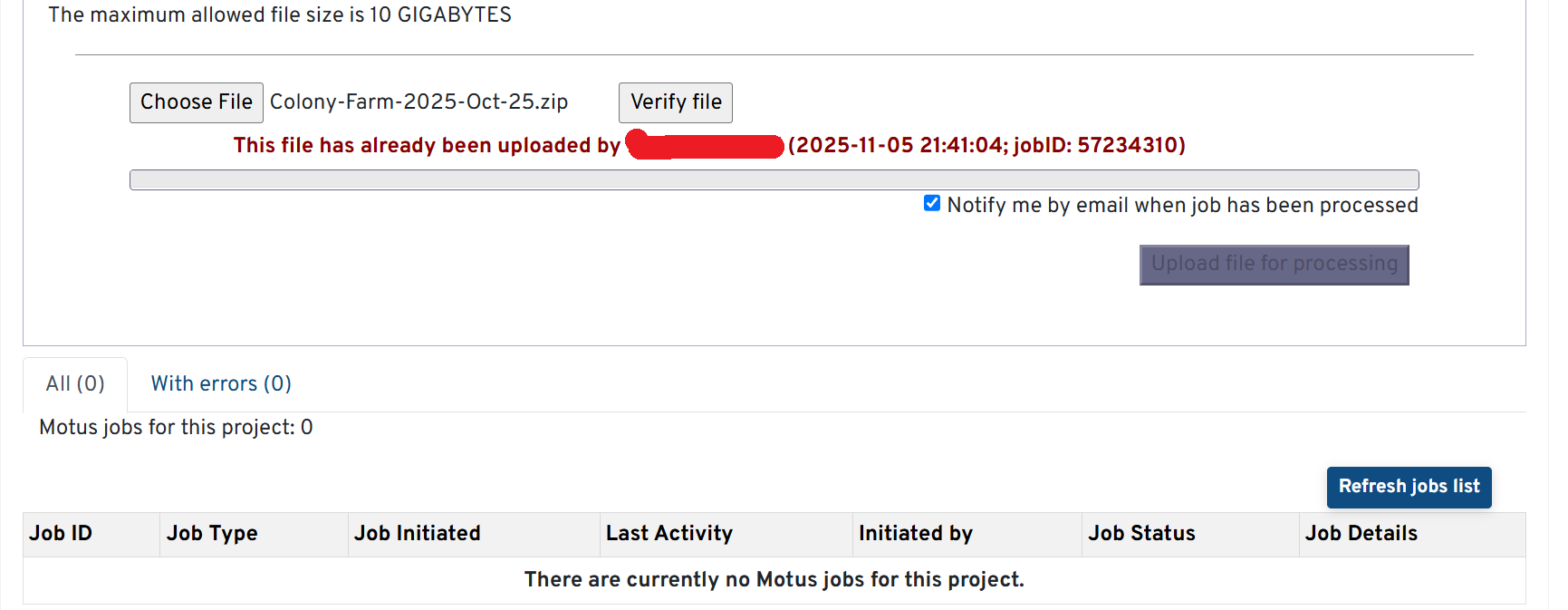
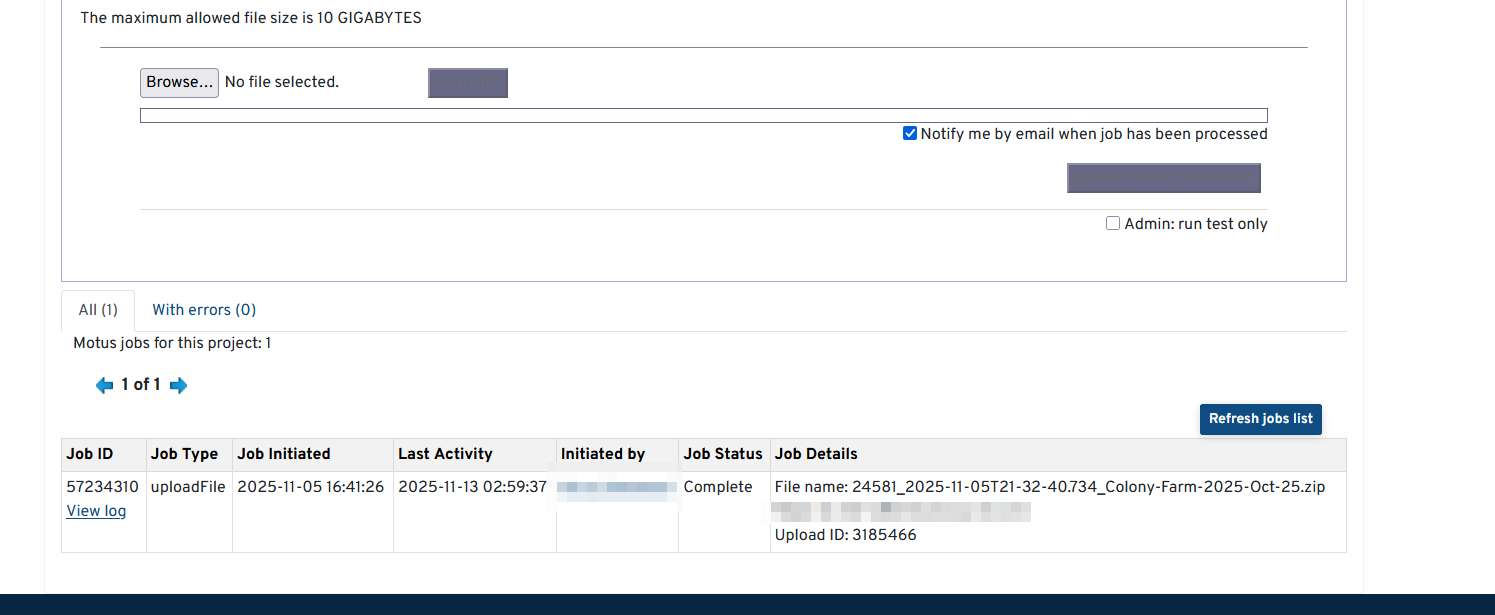
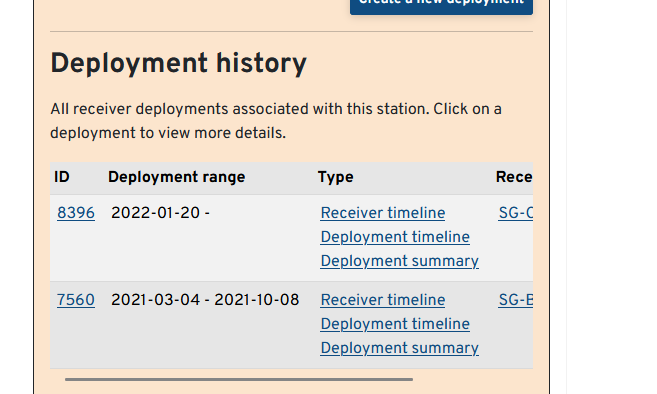
First, there’s no real cause for concern with the “already uploaded” message. That just indicates that the file has indeed already been uploaded. In this case, the file was uploaded in November 2025 so has already been processed (see the screenshot below, from Project 306’s upload page, where this file was uploaded to and the one the station is associated with). So there’s nothing else you need to do with this particular file.
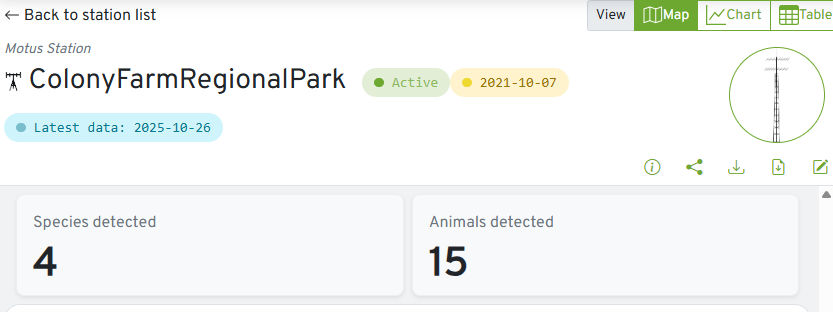
As for the mismatch between the most recent detection and the most recent data dates, that has to do with the definitions. The most recent data date really just refers to the most recent date Motus has anything from this receiver deployment.
You can get a better sense of this using the various timelines ( https://docs.motus.org/en/explore/detection-timeline).
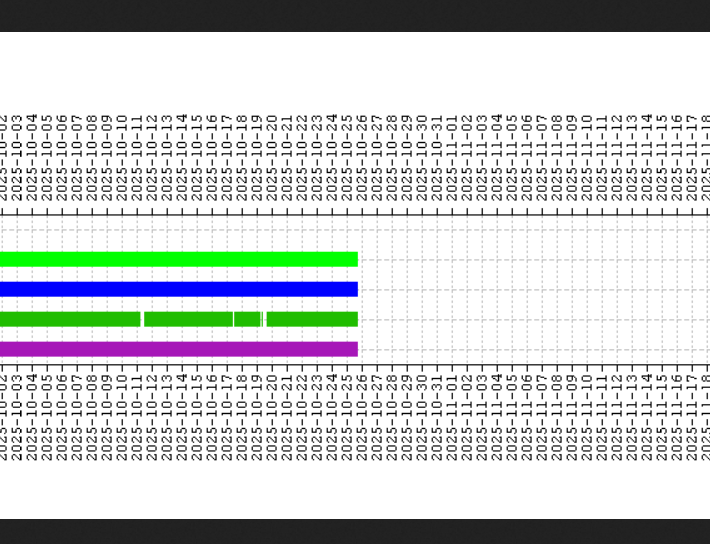
In this case case, there were GPS hits and consistent pulses (radio noise at the frequency the dongles are listening to) on 3 antennas right up to October 26 2025. That’s what the most recent data refers to: the station was powered and recording, and the data has been processed.
There is something that jumps out, though. This station appeared to be powered and recording for well over 3 years without a single detection
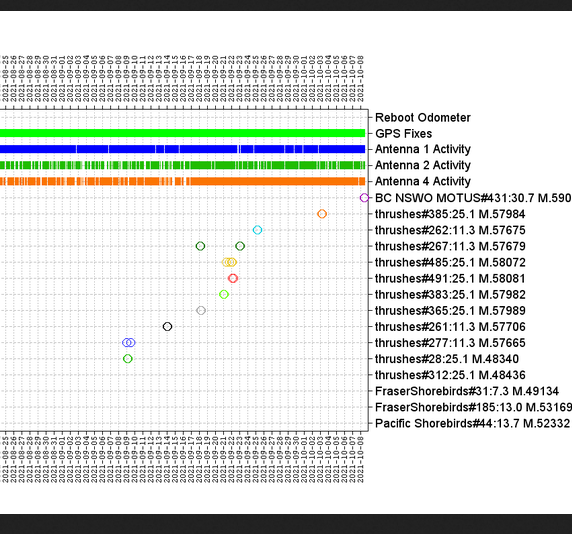
The detections you see on the Explore dashboard from 2021 are from a previous receiver deployment at this station (the SensorGnome was swapped, which necessitated an update to the station metadata).
Below is a screenshot from that receiver deployment
The fact that this station detected 15 tags in 7 months, then not a single tag for more than 3.5 years, is very suspicious.
Assuming the station is still running, there would be another year of data to download and then upload to Motus. If you are visiting, it is a good opportunity to try to troubleshoot. If you have a tag you can activate as a test, bring that – and upload the relevant tag database to the SG so you can get live updates. If you have a spare SensorGnome (or just the Pi) or other receiver and dongles, those would be good to have on hand as well. Also, you can test with a Nano VNA or similar to spot issues with the antennas, cables, or connections.