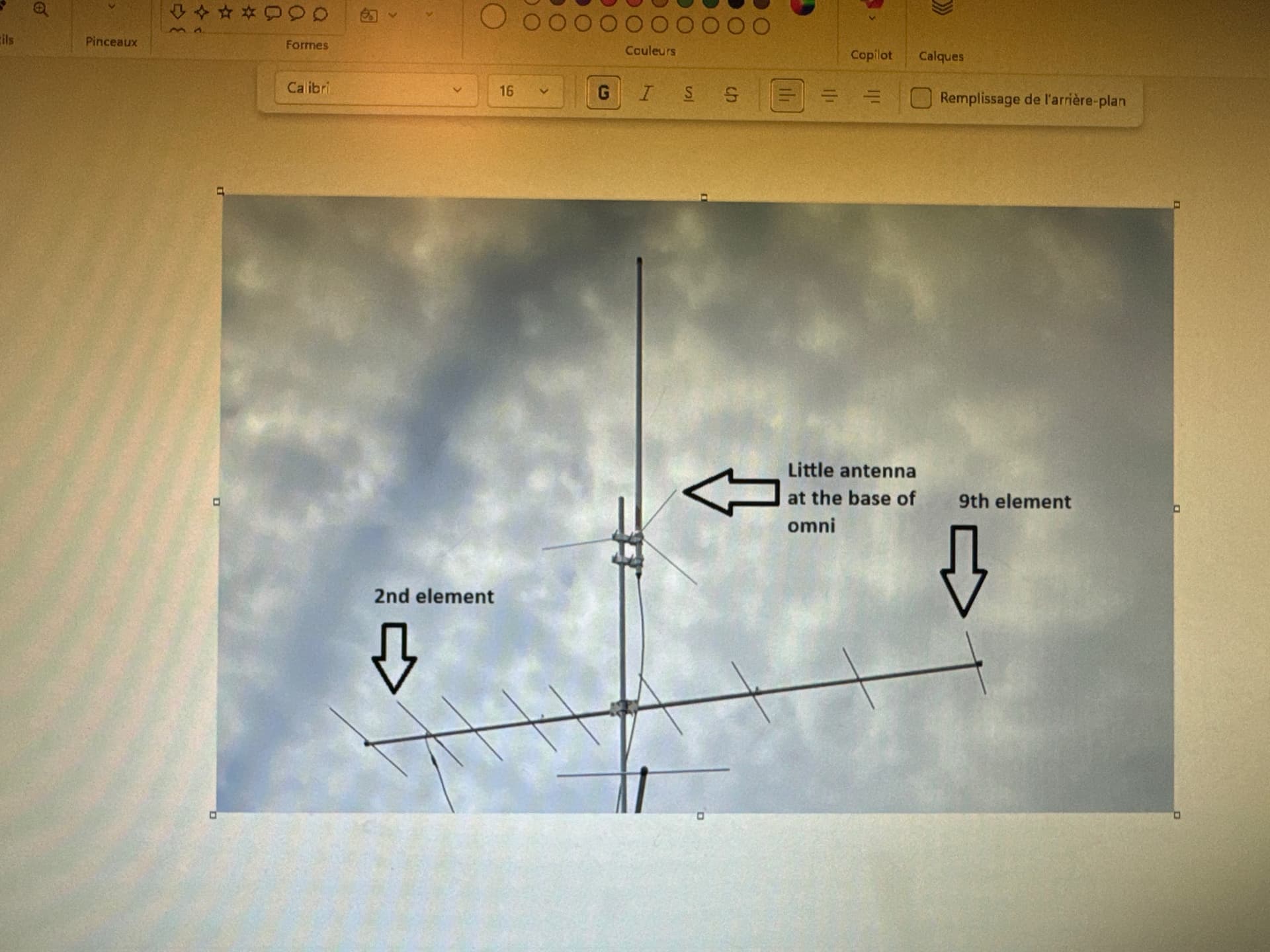
I am located in Quebec, Canada. Does anyone know of a company that sells elements to replace some that are broken on 9 elements VHF Yagi and omnidirectional antennas? I checked with ZDA communications and it is not possible. I think it’s a shame to have to buy everything new when the majority is functional…
I’ve been building some of my own antennae lately. A Yagi is not all that complicated and there are instructions online (many designs). If you are just replacing elements, you can just copy the length and position that is on the existing antenna. If it’s the driven element (second from back, most important element), you may need to figure out the co-ax connection, jumper or gamma match - depending on the design used.
I’m not sure where you are located, but you might be able to get aluminum rod or tubing from a hardware store. I fixed one element with a piece of car brake line (then cut and drilled)…and it worked! Hopefully my car will still stop…kidding!
Hi Cathy,
I think I’m on the other side of the Atlantic (in France), and sending it to me would be too expensive.
But it’s not very difficult to repair an antenna by replacing the broken elements with aluminum, which you can find at a hardware store. You need to cut the new elements to the same length as the broken ones and put them back in the same place on the antenna.
You can contact Hamradio for help.
For the second element, it’s just the insulating plastic piece that’s broken (because it’s the dipole made up of two half-elements).
It’s easy to recreate with a 3D printer, taking care to print the new piece lengthwise for added strength. You need to use a UV-resistant material, for example, PETG (definitely not PLA). You’ll first need to design the part using a program like Fusion 360.
Start by removing the heat-shrink tubing to take all the necessary measurements with calipers. (If you can’t find anyone to help you across the Atlantic, I could possibly make this small part for you; shipping from France shouldn’t cost much…).
Once repaired, you’ll need to reapply heat-shrink tubing with a heat-sealable adhesive (it’s important that it’s heat-sealable for a watertight connection to the antenna cable), which you can find at www.rs-online.com
Best regards
Bruno from France
Make contact with your local amateur (ham) radio operators. Some of their members will be antenna builders and might even be willing to repair the antenna for you, and at least will know of good sources for tubing.
Thank you for your reply, I am located in Quebec, Canada (I forgot to precise it!). I will surely look in the hardware stores to find the right fit for our elements, but I won’t take any part on my car
Since they cut it all to the base (we had some vandalism as you can guess), I will check on our other 9 Element antennas (we bought them from Intermod, (9E166-NF)) to see which kind of connectors we need and if we can buy it somewhere!
Ah! I’m in Ontario so we would have similar sources. Canadian Tire or Rona have aluminum rod and some piping, but to get the exact one you might want to try Metal Supermarket.
Thank you for your reply! We will surely look for the 9th elements in the hardware store. For the 2nd elements, I will contact some repairers next to our office (we are located in Quebec) to see if they can do it, because this is really not in our field expertise and I want to make sure it is well done!
Some of the elements are tubular aluminum and can be made to fit, The ground radial are common items and can be ordered from the manufacturer, what brand is the yagi and vertical dipole antenna, ZDA is the middle man, They dont make the antennas,
These have been purchasable from Laird itself in the past if you get a hold of one of the distributors (e.g. ArcAntenna). It’s not an official service, but if you get the right person on the line they can order them for you. At least that was the case a few years ago…
We actually have a lot of spare elements at Birds Canada HQ in Ontario. Whether we have what you need (the outer elements are the ones that tend to fail so we have fewer of them) and whether we can dig them out and get them to you in a timely manner are another matter. We’ve been intending to do an accounting of what we have and make a post here to people who may need them, but it’s low on the priority list.
[Note that my comment is only relevant for Laird antennas since they have a different method of attaching to the boom. Maple leaf / intermod antenna elements are actually simpler to replace since they are little more than a metal rod.]
I am in Quebec, Canada. I am looking for some electronic repairers near my location, but without success for the moment. We can probably repair the 9th elements ourselves, but for the 2nd, I’d like to make sure that is done by professionnals (which we aren’t! )
Camille from CWS-ECCC also told me they had a few 9th elements in stock. We could probably buy some at a hardware store and make them ourselves. I’ve never dealt with Laird or ArcAntenna; we bought them in the spring of 2024 from Intermod. I’ll take a chance and contact them for the 2nd elements, thanks!
I’m not familiar with Intermod as a company , But it looks like the antenna is similar to the PLC 1669-Rev 2 which is a cheaper Chinese made antenna that’s relabeled with the Rev2 label .
The elements should be interchangeable? But it looks like the issue in your snapshot is the coax connector that needs to have another N-Female connector soldered and crimped back on,
The shrink sleeve can also be removed and and the caulking underneath removed and resealed with more shrink tube and silicone caulking after the repair,
If there’s a Ham Radio club near you they can probably direct you to someone in the club that can make the repair easily?
Here is a list of clubs. If you click on Join, It will show you their contact information.
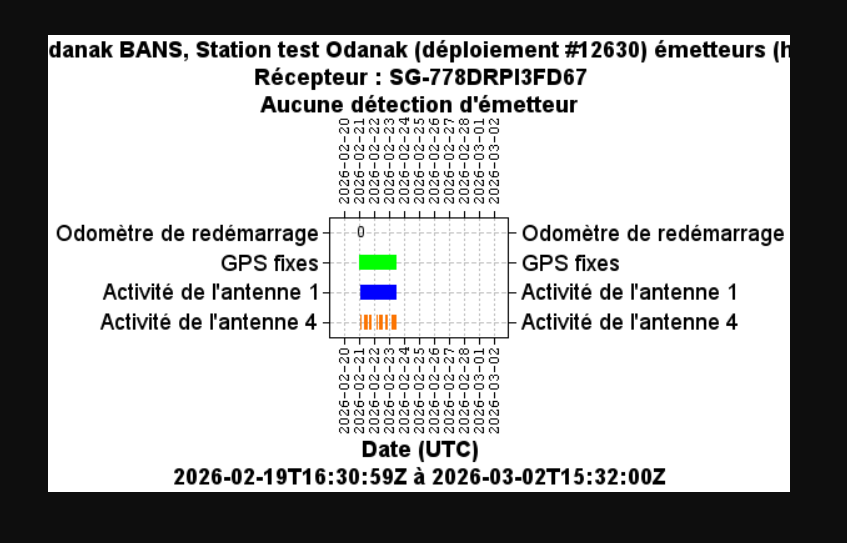
Looking at the activity of antenna 1, it seems fine, except that there were no other antennas connected… so where is the activity on antenna 4 coming from?
Do you think the problem is with the repaired antenna or somewhere else?
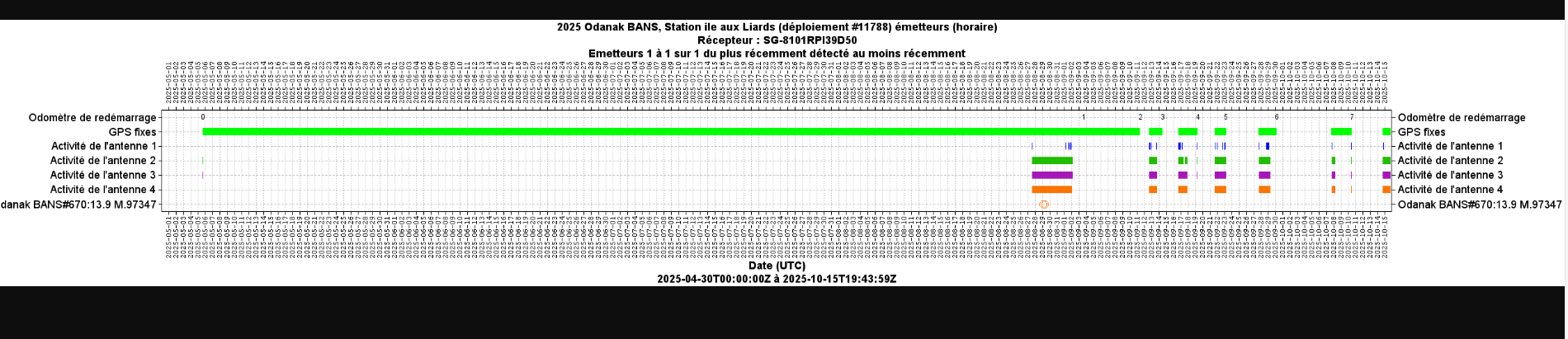
Furthermore, when looking at the activity of some of our stations from last summer, the activity is often choppy like antenna 4’s or even completely inactive (see below). Do you know what might be causing this? We have LMR400 cables at each station.
This is the signal of the station losing power intermittently. If the choppiness is different from the green GPS line (NOT what I see in this image), then it might be overload of the USB bus.
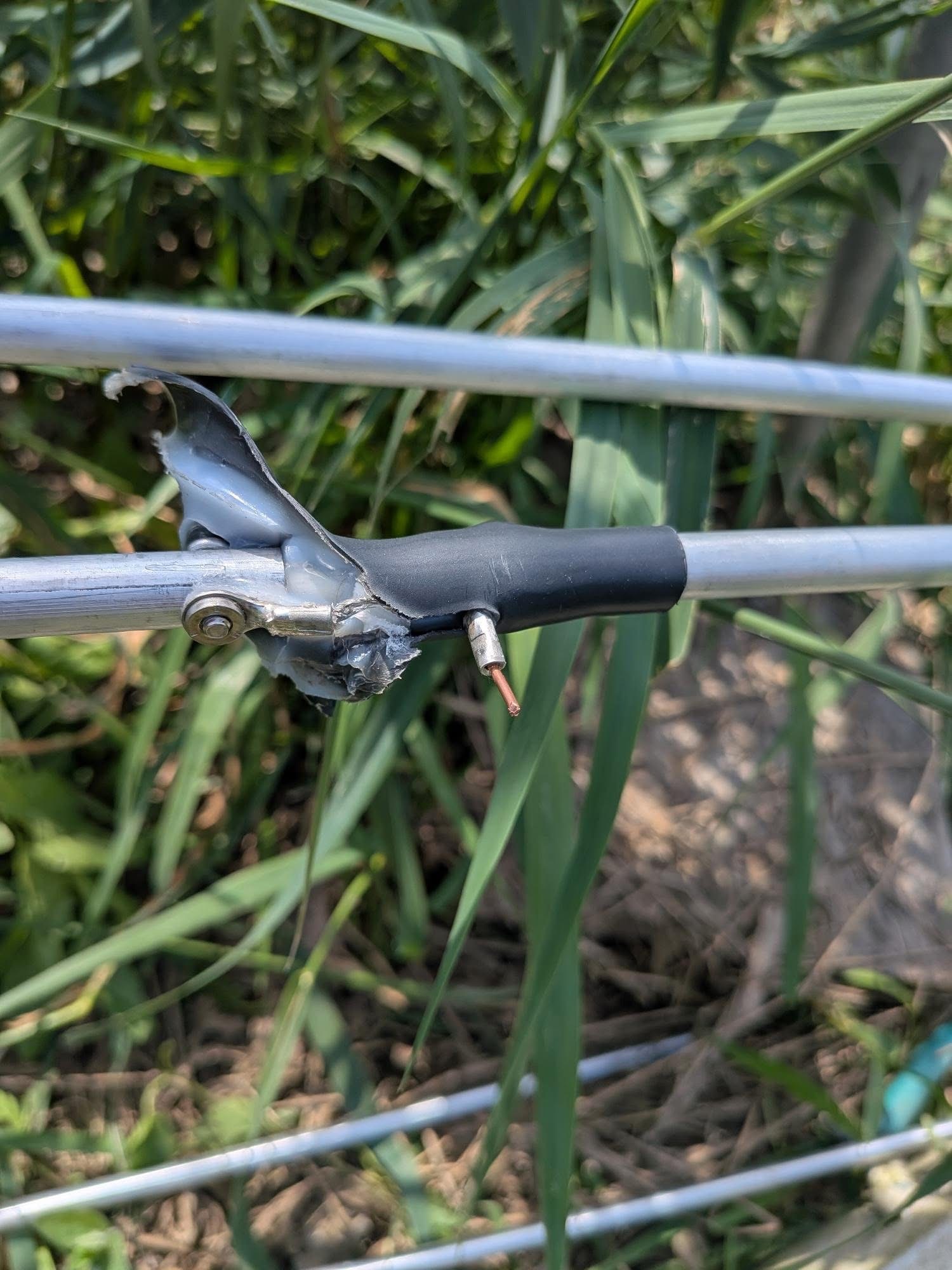
 Since they cut it all to the base (we had some vandalism as you can guess), I will check on our other 9 Element antennas (we bought them from Intermod, (9E166-NF)) to see which kind of connectors we need and if we can buy it somewhere!
 )
)